
Evangelicals & African American Political Agency: The Harris Faulkner Panel and the Question of Cultural Permission
The Conversation That Sparked Debate

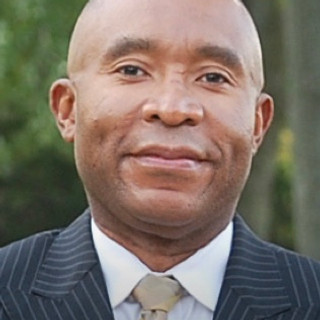
Harris Faulkner hosts a panel discussion examining political independence and cultural expectations
During a recent segment hosted by Harris Faulkner, commentators April Chapman, DeVory Darkins, and CJ Pearson discussed political independence, public perception, and ideological diversity within African American communities.
While the exchange appeared political on the surface, the underlying issue extended far beyond party affiliation. The discussion centered on African American political agency — specifically, whether individuals are permitted independent political thought when it diverges from dominant cultural expectations.
African American Political Agency and Cultural Expectation
Political agency assumes something fundamental: Individuals possess the moral and intellectual capacity to reach conclusions independently of collective pressure.
Yet modern discourse increasingly treats political deviation not merely as disagreement but as disqualification. When African Americans express viewpoints outside assumed ideological boundaries, criticism frequently shifts from argumentation to delegitimization.
The implication becomes clear:
Agreement affirms authenticity. Dissent invites suspicion.

CJ Pearson discusses political independence and generational ideological diversity
When Disagreement Becomes Delegitimization
Throughout the panel, the tension revealed a recurring cultural pattern. Debate is welcomed — so long as conclusions remain predictable. However, once individuals reject assumed political alignment, disagreement often becomes a moral accusation.
History demonstrates that societies frequently confuse conformity with unity. But unity imposed through expectation is not genuine consensus; it is social enforcement. The reaction to politically independent voices, therefore, raises a serious question:
Is diversity celebrated only when outcomes remain uniform?
An Evangelical Framework for Moral Agency
Evangelical theology begins with individual accountability before God.
Scripture teaches:
“So then every one of us shall give account of himself to God.”— Romans 14:12

Image of Romans 14:12
This principle establishes moral responsibility at the individual level — not the collective one.
From a biblical worldview, conscience cannot ultimately be governed by culture, media consensus, or political tribe. Faithfulness requires evaluation of ideas according to truth rather than popularity.
The Evangelical understanding of human dignity rests precisely here: Every person bears responsibility before God for belief, judgment, and action.
Media Narratives and the Limits of Acceptable Thought
The Harris Faulkner panel illustrates a broader cultural dynamic increasingly visible in public discourse.
Modern media environments often promote representation while simultaneously narrowing acceptable conclusions. Voices are amplified — provided they reinforce prevailing narratives. But authentic intellectual freedom allows disagreement without exile.
A society confident in its ideas does not fear dissent.
Why This Conversation Matters Now
The importance of this discussion extends beyond politics.
It concerns whether individuals retain the freedom to reason independently without forfeiting cultural legitimacy. For Evangelicals engaging public life, allegiance must never be subordinated to approval.
Truth has never depended upon consensus. And throughout history, Evangelical conviction has frequently required standing apart from prevailing opinion rather than conforming to it.
Watch the Full Panel Discussion

📺 Harris Faulkner Interview featuring April Chapman, DeVory Darkins, and CJ Pearson:https://www.facebook.com/faulknerfocus/videos/harris-faulkner-sat-down-with-devorydarkins-unshakablewithapril-and-thecjpearson/
Conclusion: Agency, Conscience, and Christian Responsibility
The Harris Faulkner panel discussion ultimately exposes something deeper than political disagreement. It reveals an ongoing struggle over who possesses the freedom to think independently — and who is expected to conform to cultural expectations.
For Evangelicals, the answer cannot be determined by media approval, political tribe, or social pressure. Political agency, rightly understood, reflects moral agency — the God-given capacity to reason, evaluate, and act according to conscience informed by truth.
The question, therefore, is not whether agreement exists.
The question is whether disagreement is permitted.
A Necessary Question Moving Forward
The reaction to conversations like this one forces an unavoidable question: Do we truly believe individuals possess political and moral agency — or only the freedom to agree with prevailing cultural expectations?
Healthy discourse requires more than tolerance. It requires allowing disagreement without moral exile.
Evangelicals understand this principle because allegiance to Christ has never depended upon cultural approval.
“And be not conformed to this world: but be ye transformed by the renewing of your mind…”— Romans 12:2
If you find my content God-glorifying and Man-edifying, the best way you can bless me as I humbly seek to bless you is to be an active participant. Active participants comment on the blog post (personal notes to me, while nice and encouraging, do not help my blog post grow) and share my content with their networks on platforms such as X and Facebook.
Thank you in advance to those who support my ministry. Make no mistake: I see what I do as ministry. It is how and why I spend considerable time and energy producing blogs and YouTube videos. I do so to complete my fourth-quarter strong for the name and majesty of Jesus the Christ, my Lord & Savior, period, full-stop, and end of story.
Check out my accompanying YouTube video on this subject: https://youtu.be/PL0eZtfcHDA
As always, keep your hands to the plow and seek to serve for an Audience of One.
With fear & trembling,
Ricky V Kyles Sr. DEd.Min.


Comments