
Evangelicals & Black Political Independence: The April Chapman Controversy
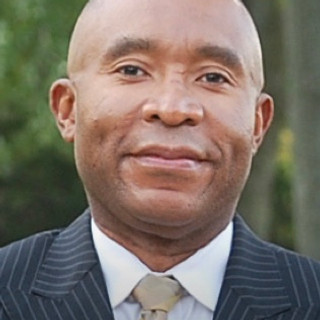
The April Chapman Controversy

April Chapman discussing the backlash she received after attending a White House Black History Month celebration.
When April Chapman and other African American Conservatives attended a White House Black History Month celebration, the backlash was swift. Rather than debating her arguments, many critics questioned her legitimacy for holding political views outside progressive expectations.
It is deplorable how we, as African Americans, treat one another. Instead of embracing vigorous debate and allowing people to form their own political ideology, as do all other ethnicities, we claim not to demand monotheism, but the moment one dares stray from the company line, they face immediate backlash.
Thankfully, April is having none of it, and neither am I. As should all mature Christ-followers, due to the Word of God admonishing its adherents that God has not given us a Spirit of fear.
This response illustrates a deeper cultural issue: the assumption that African Americans must maintain uniform political views. I would submit this is due to Thesis #2: The Negro Church has apostatized writ large.
I would further submit that there can be no other explanation for the African American community that aligns politically to such a degree with one political party due to God's judgment upon African Americans. When African Americans comprise 5.5% of the U.S. population but account for 47% of the abortions, what should one expect if God is indeed Holy as He purports Himself to be?
But intellectual freedom requires something different.
It requires the freedom to disagree. It requires Men and Women of conviction to not shrink back from the trappings of the Evil One. While it will never be in the main, God is nonetheless raising up more and more African Americans to come out from the darkness of the Democratic Party, and for that, I am supremely thankful.
Black Political Independence and the Problem of Political Expectations
The reaction to April Chapman ultimately raises a broader cultural issue about Black political independence—the freedom of African Americans to form political convictions based on their own reasoning rather than social expectation.
Thomas Sowell and the Problem of Political Monoliths

Image of Thomas Sowell
Economist Thomas Sowell has repeatedly criticized the tendency to treat African Americans as a political voting bloc.
“Civil rights used to be about treating everyone the same. But today, some people are so used to special treatment that equal treatment is considered discrimination.”
Sowell’s argument is straightforward: equality requires treating individuals as individuals, not as representatives of racial political expectations.
Clarence Thomas and the Cost of Independence

Image of Justice Clarence Thomas
Justice Clarence Thomas has spoken candidly about the pressure placed upon African Americans who hold independent political views.
“I will not be intimidated by people who think I should think a certain way because of my race.”
Thomas’ experience reflects a broader cultural tension: political conformity is often demanded where intellectual diversity should be welcomed.
Booker T. Washington and Personal Dignity

Image of Booker T. Washington
Long before modern political debates, educator Booker T. Washington emphasized personal dignity and independence.
“I shall allow no man to belittle my soul by making me hate him.”
Washington believed progress required education, responsibility, and moral independence rather than political coercion.
A Biblical Foundation for Human Agency
Evangelical anthropology begins with the doctrine of the Imago Dei. Genesis 1:27 teaches that every person is created in the image of God. That truth affirms both dignity and moral agency.
Political identity should never override individual conscience.
Freedom requires the ability to evaluate ideas, convictions, and policies without coercion.
The Real Question
The controversy surrounding April Chapman ultimately raises a larger cultural question:
Should individuals be allowed to form their own political convictions?
Or should identity determine ideology?
The answer to that question reveals much about how society understands freedom.
Grab a copy of my book Weighed and Found Wanting: An Analysis of Major Evangelical Political Engagement in America
If you find my content God-glorifying and Man-edifying, the best way you can bless me as I humbly seek to bless you is to be an active participant. Active participants comment on the blog post (personal notes to me, while nice and encouraging, do not help my blog post grow) and share my content with their networks on platforms such as X and Facebook.
Thank you in advance to those who support my ministry. Make no mistake: I see what I do as ministry. It is how and why I spend considerable time and energy producing blogs and YouTube videos. I do so to complete my fourth-quarter strong for the name and majesty of Jesus the Christ, my Lord & Savior, period, full-stop, and end of story.
As always, keep your hands to the plow and seek to serve for an Audience of One.
With fear & trembling,
Ricky V Kyles Sr. DEd.Min.


Comments