
Evangelicals & the Legacy of MLK
- Ricky Kyles

- Jan 14
- 3 min read
Updated: Jan 28
Introduction: A Legacy Often Invoked, Rarely Examined
Few figures in American history are invoked more frequently — and examined less honestly — than Martin Luther King Jr. His name is regularly appealed to in support of modern political causes, moral claims, and cultural movements. Yet appeals to King often rely on selective quotations and sanitized memory rather than serious engagement with his theology, worldview, and moral framework.
If Evangelicals are going to reference the legacy of MLK, they must do so with intellectual honesty — distinguishing between King’s biblical foundations and the modern agendas that now speak in his name.
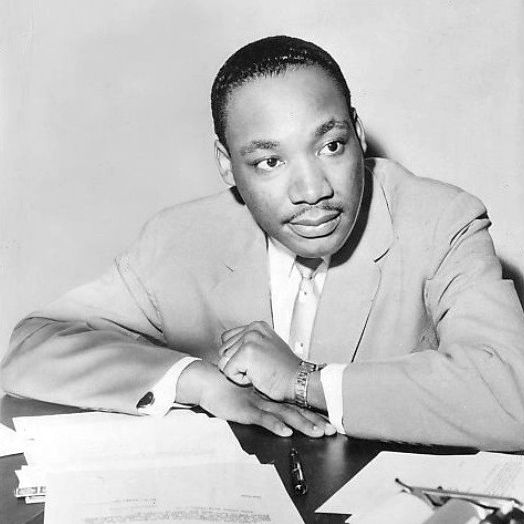
King’s Moral Vision Was Biblically Grounded
Martin Luther King Jr.’s public moral arguments were explicitly rooted in Scripture and natural law. He appealed repeatedly to biblical justice, human dignity grounded in creation, and moral accountability before God.
In his Letter from Birmingham Jail, King wrote that an unjust law is one that is out of harmony with the moral law — a concept borrowed directly from Augustine and Aquinas, not modern identity politics.
“An unjust law is no law at all.”
This was not a rejection of law itself, but an appeal to a higher moral standard grounded in God’s character.
The Legacy of MLK and the Misuse of His Authority
Modern activists frequently invoke King to justify causes he never endorsed and moral frameworks he would not recognize. Appeals to King are often used to sanctify:
Sexual autonomy
Abortion rights
Lawlessness and civil disorder
Identity-based moral authority
Yet King consistently emphasized moral discipline, personal responsibility, and nonviolent order, not perpetual grievance or cultural revolution.
To invoke King while rejecting his moral framework is to borrow his authority while abandoning his theology.
The legacy of MLK is frequently invoked in modern discourse, yet often detached from the biblical worldview, moral discipline, and respect for law that defined his public witness.

Nonviolence, Order, and the Rule of Law
King’s commitment to nonviolence was not merely strategic; it was theological. He believed moral persuasion, disciplined restraint, and lawful protest were essential to maintaining justice without descending into chaos.
He warned explicitly against riots, violence, and disorder — seeing them as morally destructive even when motivated by real grievances.
This stands in sharp contrast to modern movements that celebrate disruption, excuse violence, and treat lawlessness as virtue.
“Law and order exist for the purpose of establishing justice.” — MLK
The Selective Memory of King
The modern retelling of King often reduces him to a symbol of protest rather than a preacher of repentance, moral law, and reconciliation. His emphasis on character, virtue, and shared moral norms is quietly set aside.
This selective memory reveals more about contemporary ideology than about King himself. The legacy of MLK is not radical autonomy or expressive individualism — it is moral courage anchored in biblical conviction.

What Evangelicals Should Recover from King
Evangelicals need not canonize King to learn from him. But they must recover what made his witness effective:
Moral clarity grounded in Scripture
Respect for law rightly ordered
Nonviolence rooted in discipline
Appeals to conscience rather than coercion
A vision of justice accountable to God
Without these foundations, appeals to King become hollow slogans rather than moral arguments.
Video: Evangelical Worldview Response
Watch more Evangelical worldview analysis on YouTube:https://www.youtube.com/@thinkingcriticallyfromanev3590
This channel exists to help Christians evaluate history, culture, and moral claims through a biblically faithful lens.
👉 Subscribe for Evangelical analysis, theology, and cultural discernment.
Conclusion: Honoring the Legacy by Telling the Truth
The best way to honor Martin Luther King Jr. is not to invoke his name reflexively, but to engage his ideas honestly. His legacy cannot be severed from the biblical worldview that shaped it.
Evangelicals must resist ideological nostalgia and recover moral seriousness — remembering that King’s vision of justice was never detached from truth, order, and obedience to God.
With fear & trembling,
Ricky V Kyles Sr. DEd.MinWith fear & trembling
Ricky V Kyles DEd.Min


Comments