
Evangelicals and Andrew Young Global Humanism and the Eclipse of the Gospel
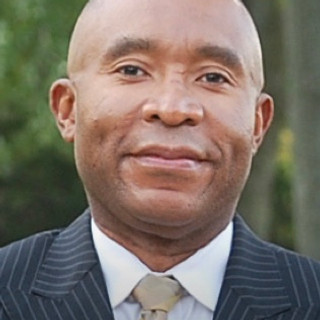

Andrew Young, addressing the United Nations as US Ambassador, symbolized his transition from pulpit ministry to global diplomacy.
Introduction
Andrew Young is part of my second bite at the apple, examining the Pagan Preachers who contributed significantly to the paradigm shift that took place within the African-American Church. It is why I postulate so fervently that the African American Church has apostatized writ large.
I began my second look with an examination of Jesse L Jackson, and I began with Jackson only because he was a prima facie example of the Gospel compromise foisted upon the African American parishioner. Young, like so many of his era, preached a Social Gospel that aimed at political liberation rather than eternal felicity with the triune God through Jesus Christ's substitutionary atonement. Young, like the rest, never presented a true and unadulterated account of the Gospel and used the Bible only when advocating for ethical reform. Hence, what we see from the likes of a Jamaal Bryant or a Ralph Warnock, as just two examples of so, so many, is a repudiation of the very call to which they purport to have received from God. Thus, I contend they are the very wolves in sheep's clothing that the Apostle Paul admonished his protege, Timothy, to avoid during the course of his ministry.
Having the appearance of godliness, but denying its power. Avoid such people.
1 Timothy 3:5
Following the Apostle Paul's lead, I admonish you to do the same with Andrew Young and all those of his ilk. Eternity literally hangs in the balance, and sadly, so many of my African American Brothers and Sisters will perish because they were more concerned with temporal remedies rather than the remedy that saves, both in this life and the life thereafter. That remedy is only found in the Biblical Gospel, which addresses man's greatest issue: sin, not temporal maladies, no matter how pressing or dire.
Andrew Young occupies a unique place in modern American history. As a close aide to Martin Luther King Jr., a pastor, a diplomat, and later the United States Ambassador to the United Nations, Young became a global representative of African American Christianity in the public square. Yet because Young spoke explicitly as a Christian minister, Evangelicals must evaluate not only his political legacy but also his theology. The issue is not whether Andrew Young advanced justice, but whether the message he proclaimed remained the Gospel once delivered to the saints. For Evangelicals, Andrew Young’s embrace of global humanism represents a clear eclipse of the Gospel, in which biblical Christianity is reshaped to serve diplomacy rather than proclamation.

Andrew Young, alongside Martin Luther King Jr., illustrates his early role within the Civil Rights movement
Evangelicals Andrew Young Global Humanism Gospel Eclipse: From Pulpit to Diplomacy
From Pulpit to Diplomacy
Young’s transition from ministry to diplomacy did not merely represent a career change. It marked a theological shift. As Young moved from the church to international politics, Christianity increasingly became a language of peace, reconciliation, and cooperation rather than a proclamation of repentance, substitutionary atonement, and faith in Christ. The categories of theology were translated into the categories of global governance.
Andrew Young in His Own Words

Andrew Young articulating his worldview in a public discourse.
Throughout his public life, Young consistently articulated a pluralistic understanding of Christianity.
He frequently emphasized religious unity over doctrinal exclusivity, stating in interviews and speeches that humanity shared a common spiritual destiny despite religious differences. Young described Jesus primarily as a moral teacher and reconciler, not as the crucified and risen Savior who redeems sinners. In his framing, Christ came to teach humanity how to live together, not to rescue humanity from divine judgment.
This emphasis reveals a theology shaped more by diplomacy than by Scripture.
Global Humanism Replacing the Gospel

Global humanitarian imagery reflecting the Social Gospel’s evolution into global humanism
Young’s theology aligns closely with the Social Gospel tradition articulated by Walter Rauschenbusch, who argued that Christianity’s primary task was the transformation of society rather than the redemption of individual sinners. In this framework, sin becomes social conflict, salvation becomes global cooperation, and the Kingdom of God becomes a just international order.
Evangelicals affirm the pursuit of justice, but Scripture defines the Gospel differently. The Apostle Paul declared that Christ died for our sins according to the Scriptures and was raised on the third day (1 Corinthians 15:3–4). That message is notably absent from Young’s public ministry.
What Is Missing

Doctrinal absence reveals theological direction.
Orthodoxy is revealed not only by what is spoken but by what is persistently omitted. Across decades of sermons, interviews, and diplomatic addresses, Young rarely addressed:
Substitutionary atonement
Repentance from sin
Justification by faith
Christ as final judge
Instead, Christianity functioned as a moral vocabulary for humanitarian consensus.
Evangelical Theological Assessment

When theology becomes diplomacy, the Church risks becoming a humanitarian institution rather than a Gospel witness.
Dr. Albert Mohler has warned that when the church replaces the Gospel with moral uplift and political relevance, it loses its power to save sinners. Though Mohler did not single out Young, this critique precisely describes the theological trajectory Young represents. The church becomes an NGO, theology becomes diplomacy, and Christ becomes a symbol rather than Lord.
Conclusion

The Gospel centers on Christ crucified and risen, not global consensus.
Andrew Young’s life reminds Evangelicals that the language of justice can never substitute for Gospel proclamation. When Christianity is reduced to global humanism, the Cross becomes unnecessary, and repentance becomes obsolete. The Church must proclaim reconciliation with God before it can meaningfully speak of reconciliation among nations.
With fear & trembling,
Ricky V Kyles Sr. DEd.Min


Comments