
Evangelicals & The Negro/Black Church at the Crossroads: How Did We Get Here?
I continue to be vexed at what I see transpiring in Black/Negro America. From mayhem in Chicago city streets to young Black/Negro males committing heinous violent crimes with their parents’ full-throated defense to many prominent Black/Negro wolves in sheep’s clothing leading untold millions astray toward their eternal demise, I find myself at a crossroads.
Do you just resign yourself to destiny and get on with your life because you dread your message will continually fall on deaf ears, or do you resolve, aided and totally dependent upon God’s Most Holy Spirit, and do as your conscience, held captive to the Word of God, compels you to do?
Well, I chose to stand resolute in postulating that how one engages in the culture politically reveals a lot about their spiritual makeup and ultimately their final destination.
As my Sunday School teacher noted this past Sunday, orthopraxy (right living) also, and necessarily, follows orthodoxy (right thinking). It is impossible to be able to display the latter without first possessing the former. Conversely, it is possible to display even mastery of the former yet never have the latter take root in one’s walk.
Satan himself could easily pass any theology exams and regurgitate any and all biblical truth. I posit this is the disposition of untold millions of professing Black/Negro Evangelicals, and they will have no one to blame but themselves.
They can cite Scripture and exhibit all the externals of Christianity, but the rubber hits the road; they constantly come up short, and as I wrote in my book, they come found Weighed and Wanting.
Despite being contemporaries of national treasures like Chad O. Jackson, Thomas Sowell, Jason Riley, Carol Swain, Walt Williams, and Glenn Loury, to name a few, who have sounded the alarm from their foxhole, just as I seek to do from mine.
I concede I only know of Dr. Swain and Chad Jackson as doing so from an explicit Judeo-Christian worldview, but I hasten to point out what I believe Augustine to have first coined: “All truth is God’s truth.”
Today’s blog will seek to prompt you to think long, hard, and critically through how we (the Negro Community) have gotten here. We have done so because we have collectively taken our eyes off of Jesus Christ, just as the Apostle Peter did when Christ bade Peter to walk on the waters. Negroes were making historic gains in all the vital and necessary positive social human capital markers, such as education, employment, homeownership, and business entrepreneurship.
Yet, almost in an instant, The Negro/Black Church has left the pursuit of hard work coupled with an unwavering devotion and commitment to God for the ill gains of LBJ’s Great Society, and look at us now. As a quick aside, much of what I lament can easily be applied to all other ethnicities, so while I focus on life in Negro/Black community, my words most certainly apply to all. God has one standard, and He does not grade on a curve, and as the late great theologian Dr. R.C. Sproul would say, "Plays for keep."
From Bondage to Blessing

America's conversation about race often begins with slavery and ends with systemic oppression. The prevailing narrative insists that the history of Negro/Black Americans is primarily one of victimization, suggesting that our present condition is largely determined by forces beyond our control. We are repeatedly told that because racism once existed—and in some forms still exists today—the Negro/Black community remains fundamentally powerless to alter its future.
Yet that narrative is incomplete.
It overlooks one of the most remarkable stories of human flourishing in modern history. It ignores the extraordinary progress made by Negro/Black Americans in the century following Emancipation. Most importantly, it obscures the principles that made that progress possible.
The story of Negro/Black America after the Civil War is not merely a story of oppression. It is also a story of resilience, faith, perseverance, industry, and personal responsibility. It is a story of men and women who refused to allow injustice to define their destiny. Though they faced unimaginable obstacles, they built families, founded businesses, established schools, accumulated property, and cultivated thriving Churches. Their accomplishments stand as a testimony not only to human determination but also to the providence of God, and for that mere fact I am eternally grateful and refuse to see myself as a victim. How can a Christ-follower be a victim when the Bible reveals we are more than conquerors in Christ?
That is the story we have largely forgotten.
A People Emerging from Slavery
When the Civil War ended in 1865, nearly four million enslaved African Americans were suddenly free. Freedom, however, did not immediately bring prosperity. Most owned no land, possessed little formal education, and entered a society where discrimination remained deeply entrenched. They faced violence, political hostility, and economic uncertainty.
Yet something remarkable happened. Rather than surrendering to despair, many embraced responsibility and understood they had the same dignity and opportunity to experience human flourishing, even in the midst of a fallen world.
Families sought to reunite after years of separation. Parents sacrificed to educate their children. Churches became centers of worship, education, and mutual support. Negro/Black entrepreneurs established businesses despite having little access to capital. Communities pooled their limited resources to build schools, colleges, and institutions that would serve generations to come.
These accomplishments did not occur because circumstances were favorable. They occurred because countless Negro/Black Americans believed they possessed both dignity and agency—the God-given capacity to make meaningful choices despite adverse circumstances.
Frederick Douglass: Freedom Requires Responsibility
Few individuals embodied this conviction more profoundly than Frederick Douglass.
Born into slavery in 1818, Douglass secretly taught himself to read despite laws designed to keep enslaved people illiterate. After escaping slavery, he became one of America's greatest orators, writers, and abolitionists. Yet his message extended far beyond ending slavery.
Douglass understood that political freedom alone could never guarantee genuine flourishing. A free people had to embrace education, virtue, hard work, and moral responsibility.
He warned against dependency upon government and urged Negro/Black Americans to cultivate self-reliance and excellence. While he relentlessly condemned the injustice of slavery and racism, he never suggested that oppression eliminated individual responsibility. Instead, he believed that true freedom required individuals to exercise wisdom, discipline, and perseverance.
His own life became living proof that circumstances need not determine destiny.
Booker T. Washington: Building from the Ground Up
A generation later, Booker T. Washington carried that message forward.
Born into slavery in Virginia, Washington experienced the crushing poverty of Reconstruction firsthand. Yet he believed lasting progress would come not primarily through political agitation but through education, vocational excellence, entrepreneurship, and economic independence.
As founder of the Tuskegee Institute, Washington helped educate thousands of Black students, equipping them with practical skills and strong moral character. He taught that genuine advancement required discipline, integrity, thrift, and perseverance.
Critics often accused Washington of accommodating segregation too readily. History continues to debate aspects of his strategy. Yet few dispute the transformative impact of his emphasis upon education, personal responsibility, and economic development.
Washington believed that a community strengthened from within would ultimately command respect from without.
Faith Was Central
Neither Douglass nor Washington viewed these virtues as merely secular principles.
Both recognized that moral character finds its strongest foundation in biblical truth.
Throughout the nineteenth century, the Negro/Black Church frequently served as the heart of Negro/Black communities. It proclaimed the authority of Scripture, encouraged stable families, promoted education, fostered entrepreneurship, and cultivated hope rooted in the Gospel rather than political movements.
It was within these Churches that generations learned perseverance, sacrifice, honesty, and faithfulness.
Their hope rested not in government programs but in the providence of Almighty God.
The Apostle Paul reminds believers:
"Whatever you do, work heartily, as for the Lord and not for men." (Colossians 3:23)
Likewise, Proverbs declares:
"The hand of the diligent makes rich." (Proverbs 10:4)
These principles shaped generations of Black Christians who understood that, while they could not control every circumstance, they remained accountable before God for how they responded to them.
A Forgotten Legacy
Modern discussions often portray Negro/Black history almost exclusively through the lens of oppression. Oppression was undeniably real. But oppression is not the whole story.
The greater story is that millions of Negro/Black Americans achieved extraordinary progress despite immense adversity. They built institutions that still stand today. They raised strong families. They established businesses. They pursued education with relentless determination. They demonstrated remarkable resilience in the face of injustice.
Their lives testify to a biblical truth often forgotten in our generation: circumstances matter, but character matters more.
The question, then, is not whether racism existed.
It did.
The more important question is this:
If Negro/Black America was making such extraordinary gains despite pervasive discrimination, what changed?
That question leads us to one of the most consequential turning points in modern American history—a shift that economists, sociologists, and cultural critics continue to debate today.
In the next section, we will examine the remarkable evidence presented by economist Thomas Sowell, who argues that Negro/Black Americans were experiencing historic advances unlike virtually any formerly oppressed people in recorded history—and why those gains began to slow during the second half of the twentieth century.
The Forgotten Miracle of Black Progress

One of the greatest misconceptions in modern discussions about race in America is the assumption that meaningful progress for Negro/Black Americans did not begin until the federal government intervened through the Civil Rights legislation of the 1960s. While no serious student of history would deny the importance of those legislative victories, it is historically inaccurate to suggest that Negro/Black America remained stagnant until Washington came to its rescue.
In fact, the historical record tells a far more remarkable story—one that economist Thomas Sowell has spent decades documenting. According to Sowell, Negro/Black Americans experienced one of the most extraordinary periods of social and economic advancement ever achieved by a people emerging from centuries of oppression. That progress was not accidental, nor was it primarily the product of government intervention. It was built upon faith, family, education, hard work, and a culture that emphasized personal responsibility over perpetual victimhood.
When slavery ended in 1865, the overwhelming majority of formerly enslaved Negro/Blacks possessed virtually none of the advantages that economists typically associate with upward mobility. They owned little or no property, had been systematically denied educational opportunities, and entered a society where discrimination remained deeply entrenched. Yet within a remarkably short period, Negro/Black communities across the South began establishing churches, schools, businesses, mutual aid societies, newspapers, and colleges. Families who had been intentionally separated under slavery were reunited wherever possible, and parents made enormous sacrifices to ensure that their children would receive the education they themselves had been denied.
These accomplishments were not isolated exceptions. They represented a broader cultural commitment to self-improvement that characterized much of Negro/Black America during the late nineteenth and early twentieth centuries. The Negro/Black Church, in particular, served as far more than a place of worship. It functioned as the moral, educational, and social center of countless communities. Pastors preached repentance, holiness, industriousness, and personal accountability. Congregations pooled their resources to establish schools, provide financial assistance to struggling families, and encourage young people to pursue education and meaningful employment. Faith was not viewed as a private spiritual exercise detached from everyday life. Rather, Christianity shaped the values that governed family life, business ethics, education, and civic engagement.
Thomas Sowell argues that this emphasis upon culture was far more significant than many modern commentators are willing to acknowledge. Throughout his writings, he repeatedly demonstrates that while discrimination unquestionably imposed significant obstacles, it did not determine outcomes to the degree many contemporary narratives suggest. He notes that long before Affirmative Action Programs or expansive federal welfare initiatives, Negro/Black Americans were steadily narrowing economic and educational gaps. Labor force participation was high, entrepreneurship flourished in many communities, literacy rates improved dramatically, and a growing Negro/Black middle class emerged despite living under conditions that would rightly be condemned today.
Perhaps nowhere was this progress more evident than within the Negro/Black family itself. Before the mid-1960s, marriage remained the cultural expectation rather than the exception. Fathers were generally present in the home and understood that providing for, protecting, and spiritually leading their families was a sacred responsibility. Mothers reinforced those values, while churches consistently taught that God's design for human flourishing began with strong families grounded in biblical truth. Although poverty certainly existed, family instability had not yet reached the catastrophic levels that would later become commonplace. It was widely understood that children benefited most when raised by both a mother and a father committed not only to one another but also to the Lord.
The importance of this cannot be overstated because Scripture consistently identifies the family—not the government—as the primary institution responsible for raising children. The Apostle Paul instructed fathers to "bring them up in the discipline and instruction of the Lord" (Ephesians 6:4), while Solomon reminded parents that faithfully training a child in righteousness establishes a foundation that often shapes the course of an entire lifetime (Proverbs 22:6). These biblical commands assume fathers who are present, mothers who faithfully nurture their children, and Churches that reinforce God's design rather than undermine it.
Sowell's analysis challenges one of the foundational assumptions of modern political discourse. While many explanations for racial disparities begin and end with discrimination, Sowell insists that culture cannot be ignored. The values a community embraces regarding education, work, marriage, delayed gratification, honesty, and personal responsibility exert an enormous influence upon its long-term prosperity. This observation does not deny the existence of racism, nor does it minimize the profound injustices Negro/Black Americans endured throughout much of our nation's history. Rather, it recognizes a biblical truth affirmed throughout history: circumstances influence people, but they do not eliminate moral agency. Individuals remain responsible before God for the choices they make, even when those choices are made under difficult circumstances.
This principle has been demonstrated repeatedly throughout history. Numerous immigrant communities arrived in America with little wealth, limited education, and significant prejudice directed against them. Nevertheless, many eventually prospered because they cultivated strong families, valued education, encouraged entrepreneurship, and emphasized moral discipline. Sowell argues that Negro/Black America once possessed those same cultural strengths in abundance. Indeed, many of those virtues were cultivated and sustained by churches that faithfully proclaimed the authority of Scripture and the transforming power of the Gospel.
The Bible repeatedly teaches that genuine flourishing is inseparable from righteousness. Proverbs 14:34 declares, "Righteousness exalts a nation, but sin is a reproach to any people." This timeless principle applies not only to nations but also to families, churches, and communities. A culture that esteems truth, diligence, integrity, and obedience to God creates fertile ground for human flourishing. Conversely, when those virtues are abandoned, decline eventually follows, regardless of how much financial assistance or governmental support is provided.
The historical evidence, therefore, presents us with a profoundly important question. If Negro/Black Americans achieved extraordinary gains during a period when legal discrimination was far more pervasive than it is today, and if those gains were accompanied by strong families, vibrant churches, and a culture that prized personal responsibility, what changed? Why did so many of those indicators begin to deteriorate during the second half of the twentieth century? It is impossible to answer those questions honestly without examining the dramatic expansion of the federal government through President Lyndon B. Johnson's Great Society programs and the prophetic warning issued by one of his own administration's officials—Daniel Patrick Moynihan. His report would identify a growing crisis within the Negro/Black family that many political leaders ignored, but history has shown that his concerns were anything but unfounded. The next chapter turns to that pivotal moment, because it marked the beginning of a cultural transformation whose consequences continue to shape the Black community to this very day.
The Great Society and the Warning America Ignored

If the first century following emancipation demonstrated the remarkable capacity of Negro/Black Americans to overcome immense obstacles through faith, family, education, and personal responsibility, then the mid-1960s marked the beginning of a dramatic shift in both public policy and cultural expectations. It was during this period that President Lyndon B. Johnson launched what he described as the Great Society, an ambitious collection of federal programs designed to eliminate poverty, reduce inequality, and create greater economic opportunity for America's most disadvantaged citizens.
While I, for one, along with many others, question the sincerity of Johnson's genuine desire to address persistent poverty, particularly in many Black communities that continued to experience the lingering effects of segregation and discrimination, and not as a political tool to secure the Negro/Black vote. The stated objective was presented as noble: to assist those who genuinely needed help and to create a society in which economic hardship would no longer trap generations of Americans.
No compassionate Evangelical should object to helping the poor. Scripture repeatedly commands God's people to care for widows, orphans, strangers, and those who are genuinely unable to care for themselves. The Mosaic Law required provisions for the poor, Christ consistently demonstrated compassion toward the needy, and the early
Church willingly shared its resources with Brothers and Sisters in distress. The issue, therefore, is not whether Christ-followers should care for those who are suffering. The question is whether the methods employed actually strengthen people or unintentionally create new forms of dependence that ultimately perpetuate the very problems they were designed to solve.
This distinction is often overlooked in contemporary political discussions. Compassion is measured not merely by intentions but also by outcomes. A physician may sincerely desire to heal his patient, but if the prescribed treatment consistently worsens the patient's condition, wisdom requires reevaluating the treatment rather than applauding the physician's good intentions. Public policy should be evaluated by the same standard. Noble aspirations cannot compensate for destructive results.
President Johnson declared an unconditional War on Poverty, believing that expansive federal intervention could substantially reduce economic inequality. Trillions of dollars flowed into new programs providing housing assistance, food assistance, cash welfare, educational initiatives, and numerous other forms of government support. For many Americans, these programs represented the fulfillment of a moral obligation to care for the disadvantaged. Yet beneath the optimism surrounding the Great Society, one of Johnson's own administration officials was quietly raising concerns that would soon prove remarkably prophetic.
In 1965, Daniel Patrick Moynihan, then serving as Assistant Secretary of Labor, authored a report entitled The Negro Family: The Case for National Action. Contrary to how the report has sometimes been portrayed, Moynihan did not deny the existence of racism or minimize the historical injustices suffered by Black Americans. Indeed, he explicitly acknowledged the devastating legacy of slavery and discrimination. Nevertheless, he argued that another crisis had emerged—one that threatened to undermine continued Negro/Black progress if left unaddressed.
Moynihan identified the weakening of the Negro/Black family as the central challenge confronting the Negro/Black community. He warned that increasing family instability, declining marriage rates, and the growing absence of fathers from the home would have consequences extending far beyond economics. Children raised without stable families would face greater obstacles in education, employment, emotional development, and social stability. Poverty, he argued, was no longer simply a financial problem; it was becoming a cultural problem reinforced by the disintegration of the family itself.
At the time Moynihan wrote his report, approximately one-quarter of Negro/Black children were being born outside of marriage. Even then, he considered that trend deeply alarming. Many critics dismissed his concerns, arguing that he was blaming the victim or diverting attention away from systemic discrimination. The report generated enormous controversy, and for many years its conclusions became politically unpopular to discuss. Yet history has rendered a sobering verdict. The very trends Moynihan warned about continued to accelerate in the decades that followed. Today, the percentage of Negro/Black children born outside of marriage is dramatically higher than it was in 1965, and fatherlessness has become one of the defining social challenges confronting many Black communities.
Economists and sociologists continue to debate the precise causes of this transformation. Serious scholars acknowledge that no single factor explains such a profound cultural shift. Economic restructuring, the decline of manufacturing jobs, changing social norms, educational failures, mass incarceration, the sexual revolution, and government policy all contributed in varying degrees. It would therefore be historically inaccurate to claim that the Great Society alone produced the collapse of the Negro/Black family. Nevertheless, many economists, including Thomas Sowell, have argued that certain welfare policies unintentionally weakened incentives for marriage and fostered long-term dependency by replacing responsibilities once carried primarily by fathers, families, churches, and local communities.
This observation should not be misunderstood as an argument against every form of public assistance. Scripture permits and even commands generosity toward those in genuine need. The concern arises when assistance becomes a permanent substitute for responsibility rather than a temporary bridge toward independence. The Apostle Paul articulated this principle with striking clarity when he wrote to the church in Thessalonica, "If anyone is not willing to work, let him not eat" (2 Thessalonians 3:10).
Paul's instruction was not directed toward those physically unable to work, but toward those who refused to accept personal responsibility while expecting others to provide for them. Biblical compassion has always been accompanied by biblical accountability.
Even more significant than the expansion of government assistance was the subtle transfer of authority that accompanied it. Institutions that had once served as the primary pillars of Negro/Black life—the family, the local church, neighborhood associations, and voluntary organizations—gradually found themselves overshadowed by federal programs. Responsibilities historically fulfilled within the home increasingly shifted toward government agencies. Problems once addressed by pastors, elders, fathers, and extended families were now expected to be solved through legislation, bureaucracy, and public funding.
This represented more than a political transformation; it reflected a profound change in worldview. Increasingly, many Americans began looking to government for solutions that Scripture assigns primarily to families and churches. The expectation gradually emerged that social problems could be solved primarily through political action rather than through moral and spiritual renewal. While government possesses a legitimate God-ordained role in restraining evil and promoting justice (Romans 13:1–7), it was never designed to replace the family as the primary institution for raising children or the church as the primary institution for forming moral character.
As Christ-followers, we should not be surprised by this reality because the Bible consistently teaches that lasting transformation begins in the human heart. Laws may restrain behavior, but they cannot regenerate sinners. Government programs may alleviate temporary hardship, but they cannot produce repentance, restore broken families, or create the righteousness that God requires. Only the Gospel of Jesus Christ possesses the power to reconcile sinners to God and transform lives from the inside out.
The tragedy of the Great Society, therefore, is not simply that some policies may have produced unintended consequences. The deeper tragedy is that many Churches gradually began placing their confidence in political solutions while neglecting the spiritual foundations that had sustained previous generations. Rather than proclaiming with renewed conviction the biblical virtues of marriage, fatherhood, holiness, repentance, and personal responsibility, many congregations increasingly echoed the language of politics more readily than the language of Scripture. The Prophetic Voice that had once challenged both sinners and society began, in many places, to grow strangely quiet.
That silence would have consequences far beyond partisan politics. Over the next several decades, increasing numbers of Churches would find themselves accommodating cultural movements that openly challenged biblical authority, often while maintaining the appearance of Christian faithfulness. The result was not merely political confusion but theological compromise—a subject we must now examine directly. When the Church Lost Its Prophetic Voice

If the deterioration of the Negro/Black family was one of the unintended consequences of the Great Society, then an equally significant question must be asked: Where was the Church? More specifically, where was the Negro/Black Church—the institution that had once stood as the moral conscience of Negro/Black America?
For well over a century, the Negro/Black Church occupied a unique and indispensable place within the community. During slavery, it proclaimed the hope of the Gospel to people who had been denied nearly every earthly freedom. During Reconstruction, it became the center of education, community life, and economic cooperation.
Throughout the Jim Crow era, it reminded believers that while earthly authorities might deny them justice, they ultimately answered to a righteous Judge who shows no partiality. The Church produced courageous pastors, faithful evangelists, missionaries, educators, and civil rights leaders who understood that lasting justice must always be grounded in the righteousness of God.
The authority of the Church rested not in political influence but in its unwavering commitment to the Word of God. Its message was often unpopular because it confronted sin wherever it was found. It called adulterers to repentance. It confronted drunkenness, dishonesty, greed, sexual immorality, and violence. It instructed husbands to love their wives sacrificially, wives to respect their husbands, parents to raise their children in the fear of the Lord, and children to honor their fathers and mothers. It proclaimed that every individual—regardless of race, wealth, or social standing—would one day stand before the Judgment Seat of Christ with fear and trembling, not because they ever felt they were morally superior to their neighbor. Just one beggar trying to point other beggars to where to find the bread.
The Church understood that its mission was not to make sinners comfortable but to call sinners to repentance.
That one vibrant prophetic voice distinguished the Church from every political movement.
Politicians sought votes.
The Church sought holiness.
Political parties sought power.
The Church sought faithfulness.
Governments can regulate external behavior through laws, but only the Gospel of Jesus Christ possesses the power to transform the human heart.
Over time, however, something began to change.
The language heard from many pulpits gradually shifted. Sermons that once centered upon repentance increasingly focused upon political liberation. The doctrines of sin, redemption, sanctification, and eternal judgment slowly gave way to discussions of systemic oppression, economic redistribution, racial grievance, and political activism. To be sure, not every predominantly Black congregation embraced this transition, and many faithful pastors continue to preach the whole counsel of God with courage and conviction. Nevertheless, a growing number of influential churches and denominational leaders increasingly spoke the language of politics with greater confidence than the language of Scripture.
This transformation did not occur overnight, nor did it happen for a single reason. The social upheavals of the 1960s, the rise of liberation theology in some theological circles, the increasing influence of secular universities upon ministerial education, and the growing expectation that pastors function as political advocates rather than shepherds all contributed to the changing landscape. While each of these developments deserves careful examination, the cumulative effect was unmistakable. Increasingly, many churches came to measure faithfulness not by conformity to the Word of God but by conformity to prevailing political narratives.
Scripture repeatedly warns against precisely this danger.
The Apostle Paul instructed Timothy, "Preach the word; be ready in season and out of season; reprove, rebuke, and exhort, with complete patience and teaching" (2 Timothy 4:2). He immediately followed that command with a sobering warning that "the time is coming when people will not endure sound teaching, but having itching ears they will accumulate for themselves teachers to suit their own passions" (2 Timothy 4:3). Paul's concern was not merely that the world would reject biblical truth; it was that professing believers would increasingly seek teachers who affirmed what they already desired to hear rather than what God had actually spoken.
The prophet Isaiah delivered a remarkably similar indictment centuries earlier. Speaking to a rebellious people, he described those who said to God's prophets, "Do not prophesy to us what is right; speak to us smooth things, prophesy illusions" (Isaiah 30:10). Human nature has not changed. Every generation is tempted to exchange uncomfortable truth for reassuring falsehood.
Perhaps nowhere is this temptation more evident than when political loyalty begins to eclipse biblical fidelity. Every political movement contains ideas that should be evaluated in light of Scripture rather than accepted uncritically. Evangelicals are called to bring every philosophy, every ideology, and every cultural trend under the authority of God's Word. As Paul declared, believers are to "take every thought captive to obey Christ" (2 Corinthians 10:5). That command applies as much to our politics as it does to our personal lives.
Yet many Churches appear to have reversed the order. Instead of allowing Scripture to judge political ideology, political ideology increasingly determines how Scripture is interpreted. Passages that confront sexual immorality, abortion, the sanctity of marriage, the distinction between male and female, personal responsibility, and individual accountability are often minimized or ignored altogether because they conflict with the priorities of contemporary political movements. In their place, greater emphasis is placed upon themes that comfortably align with prevailing cultural narratives while the more demanding aspects of biblical discipleship receive comparatively little attention.
The consequences of this shift extend far beyond election cycles. When churches cease proclaiming the full counsel of God, congregations inevitably become spiritually malnourished. If sin is no longer clearly identified, repentance becomes unnecessary. If repentance disappears, the Gospel itself is emptied of its urgency. Christ did not come merely to affirm people in their present condition; He came to save sinners and to call them into a life of holiness. As Christ Himself declared, "If anyone would come after me, let him deny himself and take up his cross daily and follow me" (Luke 9:23). Discipleship has always required submission to God's authority rather than accommodation to the spirit of the age.
This is why the issue before us is ultimately theological rather than political. Elections come and go. Parties rise and fall. Nations flourish and decline. But the Church has been entrusted with an unchanging message. Whenever the Church exchanges that message for the promises of political power, it ceases to function as the prophetic witness Christ established it to be.
The most visible evidence of that transformation lies not merely in sermons but in the political allegiances that have come to characterize much of the Negro/Black Church. For decades, overwhelming majorities of Black Christians have supported candidates and platforms that increasingly affirm abortion, celebrate sexual relationships that Scripture identifies as sinful, redefine marriage, embrace transgender ideology, and marginalize biblical teaching on the sanctity of life and human sexuality. The next chapter examines this growing tension and asks a difficult but unavoidable question: Can followers of Jesus Christ consistently support policies that directly contradict the moral teaching of Scripture while claiming that biblical authority remains their highest allegiance? Can the Church Serve Two Masters? The Collision Between Scripture and Political Loyalty
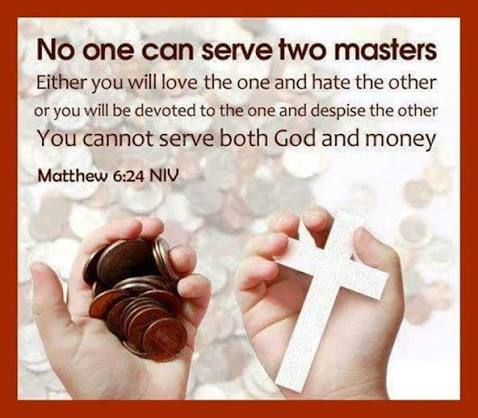
One of the defining characteristics of the modern Negro/Black Church is not simply that many of its members vote for Democratic candidates. Chris-followers of sincere conviction have always disagreed about tax policy, foreign affairs, criminal justice, healthcare, and countless other matters where Scripture does not prescribe a single governmental solution. Those questions often require prudential judgment, and faithful believers may reasonably arrive at different conclusions.
The concern raised in this essay is of a different order altogether.
The issue is not whether Christ-followers may disagree over matters of political prudence. The issue is whether the Church has become so closely identified with one political party that it no longer speaks prophetically when that party openly celebrates conduct that God explicitly condemns. When political loyalty begins to mute biblical conviction, the Church ceases to function as Salt and Light and instead becomes another constituency seeking influence in the political process.
For generations, Negro/Black Americans have overwhelmingly supported Democratic presidential candidates. Since the passage of the Civil Rights Act and the Voting Rights Act, Democratic nominees have routinely received approximately eighty to ninety percent of the Negro/Black vote in presidential elections. Those voting patterns, by themselves, do not establish spiritual compromise. Voting for a candidate is not the same thing as endorsing every policy he or she advocates. Nor should Christians imagine that either major political party perfectly represents biblical Christianity. Every political movement reflects the imperfections of fallen human beings.
Nevertheless, voting patterns raise legitimate questions when they remain remarkably consistent despite a party's increasing embrace of policies that directly contradict the clear teaching of Scripture.
During the past several decades, the Democratic Party has increasingly defined itself through policy positions that affirm legal abortion throughout much or all of pregnancy, recognize same-sex marriage as a moral good, promote gender identity concepts that reject the biblical distinction between male and female, oppose many religious liberty protections sought by traditional Christians, and celebrate sexual ethics fundamentally incompatible with historic Christian teaching. These positions are not peripheral matters. They concern the sanctity of human life, the nature of marriage, the created order, parental authority, and God's design for humanity—subjects upon which Scripture speaks with unmistakable clarity.
One need not speculate about God's position on these matters because He has already spoken.
The prophet Jeremiah records the Lord declaring, "Before I formed you in the womb I knew you" (Jeremiah 1:5). David rejoices in Psalm 139 that God knit him together in his mother's womb and that every one of his days was written in God's book before one of them came to be. These passages do not merely express poetic sentiment; they reveal that unborn children possess dignity because they bear the image of their Creator.
Likewise, the opening chapters of Genesis establish that God created humanity "male and female" (Genesis 1:27). Christ Himself reaffirmed that created order when He taught, "Have you not read that he who created them from the beginning made them male and female?" (Matthew 19:4). Marriage is therefore not a social construct subject to cultural revision but a covenantal institution established by God Himself. Christ-followers may and should treat every person with dignity, compassion, and respect, yet genuine love never requires redefining what God has already defined.
The Apostle Paul speaks with equal clarity regarding sexual morality. In Romans 1, he describes humanity's rejection of God's created order as evidence of a culture exchanging truth for falsehood. In 1 Corinthians 6:9–11, he reminds believers that some among them had once lived in various forms of sexual immorality, greed, drunkenness, and idolatry. Yet Paul's emphasis is not upon condemnation alone. He immediately adds the glorious hope of the Gospel: "Such were some of you. But you were washed, you were sanctified, you were justified in the name of the Lord Jesus Christ." Scripture never teaches that people are beyond redemption. Rather, it proclaims that every sinner—including every one of us—may be transformed through the saving work of Christ.
This distinction is crucial because contemporary political discourse often frames these issues solely in terms of rights, identity, or personal autonomy. Scripture frames them differently. The Bible consistently teaches that human beings do not belong ultimately to themselves but to the God who created and redeemed them. Consequently, moral truth is not determined by majority vote, judicial decision, or legislative enactment. God's commands remain binding regardless of whether they are popular or politically advantageous.
Herein lies the dilemma confronting much of the modern Negro/Black Church.
Why have so many pastors spoken forcefully against historical injustices while remaining comparatively silent regarding abortion, fatherlessness, sexual immorality, the redefinition of marriage, or transgender ideology? Why are congregations regularly mobilized for voter registration drives, political rallies, and partisan causes, yet comparatively little energy is devoted to calling men back to biblical fatherhood, confronting sexual sin, strengthening Christian marriages, or equipping believers to think biblically about the pressing moral questions of our day?
These are uncomfortable questions, but faithful shepherds have never been called to avoid uncomfortable questions. The prophet Ezekiel was appointed as a watchman for Israel precisely because warning people of approaching judgment was an act of love, not hostility. God told him, "If you do not speak to warn the wicked...his blood I will require at your hand" (Ezekiel 3:18). Silence, in God's economy, is not neutrality. When those entrusted with proclaiming the truth fail to do so, they bear responsibility for their neglect.
The Apostle Paul expressed a similar conviction near the end of his ministry when he declared to the Ephesian elders, "I did not shrink from declaring to you the whole counsel of God" (Acts 20:27). Notice the breadth of Paul's commitment. He did not preach only the portions of Scripture that were culturally acceptable or politically expedient. He proclaimed the entirety of God's revealed truth because he understood that selective obedience is ultimately disobedience.
It is here that many pastors face their greatest temptation. Criticizing racism often receives widespread affirmation. Confronting greed may generate little controversy. Speaking against violence generally unites an audience. But publicly opposing abortion, affirming biblical marriage, rejecting gender ideology, or warning against sexual immorality frequently invites criticism, public ridicule, and even accusations of hatred. Consequently, some Churches gradually adjust their message—not because Scripture has changed, but because the surrounding culture has.
Christ warned His disciples that such pressures were inevitable. "If the world hates you," He said, "know that it has hated me before it hated you" (John 15:18). Faithfulness has never been measured by cultural approval. The Church is called to bear witness to the truth whether society applauds or condemns its message.
This brings us to an unavoidable conclusion. The greatest challenge confronting the Negro/Black Church is not primarily political; it is theological. Before asking which party deserves our allegiance, we must first ask whether our allegiance belongs wholly to Jesus Christ. Political parties are temporary. Christ's kingdom is eternal. Every earthly platform must therefore stand beneath the authority of God's Word rather than above it.
The encouraging news is that a growing number of Black scholars, pastors, and public intellectuals have begun raising these very concerns. While they differ in their emphases and backgrounds, voices such as Thomas Sowell, Glenn Loury, and Carol Swain have challenged prevailing assumptions about race, culture, family, and political identity. Their observations do not replace Scripture, but they help illuminate how far contemporary thinking has drifted from the principles that once sustained Black America. It is to those voices that we now turn. Voices Crying in the Wilderness
Throughout biblical history, God has often raised up individuals who were willing to challenge the prevailing assumptions of their age.
Noah warned a world that mocked the coming judgment.
Elijah stood almost alone against the prophets of Baal.
Jeremiah proclaimed God's truth to a nation determined not to listen.
John the Baptist confronted the moral corruption of his own generation, and the Apostle Paul repeatedly called the Church to reject the philosophies of the surrounding culture.
These men shared one common characteristic: they were far less concerned with popularity than with faithfulness.
The same pattern can be observed today. While much of academia, the media, and many religious leaders continue to explain the condition of Negro/Black America almost exclusively through the lens of systemic oppression and historical injustice, a growing number of Negro/Black intellectuals have courageously challenged that narrative. They do not deny America's painful history, nor do they minimize the reality of racism. Rather, they argue that an exclusive focus upon external oppression has distracted the Negro/Black community from confronting the internal cultural and moral problems that now present the greatest obstacles to its flourishing.
Although these scholars write from different religious perspectives, their observations frequently intersect with principles that Scripture has proclaimed for thousands of years. They remind us that truth is not determined by popularity, and that genuine compassion requires the courage to tell people what they need to hear rather than merely what they want to hear.
Dr. Thomas Sowell: The Tyranny of Victimhood
Few contemporary thinkers have done more to challenge conventional wisdom regarding race than economist Thomas Sowell. Over the course of several decades, Sowell has carefully examined economic data, historical records, educational trends, and cultural patterns in order to understand why some communities flourish while others decline. His conclusions have often placed him at odds with both political leaders and media commentators because he consistently refuses to reduce complex social problems to simplistic explanations.
One of Sowell's central arguments is that cultures matter. Values matter. Family structure matters. Education matters. Work ethic matters. Economic incentives matter. While discrimination can certainly hinder progress, he argues that it cannot adequately explain why different groups facing similar hardships often experience dramatically different outcomes. Consequently, policies that focus exclusively upon external barriers while ignoring internal cultural realities are destined to disappoint.
Perhaps one of Sowell's most penetrating observations concerns the danger of cultivating a culture of victimhood. He has argued that when people are repeatedly taught that they possess little agency over their own lives, they begin to believe it. Expectations decline. Personal responsibility weakens. Failure becomes increasingly attributed to external forces, while success is viewed as largely unattainable without government intervention. In the long run, this mindset becomes profoundly destructive because it removes from individuals the very sense of responsibility necessary for meaningful achievement.
The Bible presents a radically different anthropology. Scripture acknowledges the profound effects of sin, injustice, and suffering, yet it never strips individuals of moral agency. From Genesis to Revelation, God continually calls human beings to repent, obey, persevere, and trust Him regardless of their circumstances.
Joseph prospered after being sold into slavery.
Daniel remained faithful while living under pagan kings.
The Apostle Paul preached the Gospel despite imprisonment, beatings, and persecution.
None of these examples deny the reality of injustice. Rather, they demonstrate that obedience to God remains possible even under difficult circumstances.
Dr. Glenn Loury: The Crisis of Moral Honesty
Economist Glenn Loury has likewise become an important voice in contemporary discussions concerning race, culture, and public policy. Although Loury's own spiritual journey differs from that of many evangelical Christians, his willingness to challenge fashionable narratives has earned both admiration and criticism.
Dr. Loury has repeatedly argued that conversations about race often become intellectually dishonest because certain facts are considered socially unacceptable to discuss. He has warned that communities cannot solve problems they refuse to acknowledge. If family instability contributes to poverty, it must be discussed honestly. If educational failure is driven in part by cultural attitudes toward learning, that reality cannot simply be dismissed as an uncomfortable inconvenience. If criminal behavior devastates neighborhoods, those realities require moral clarity rather than political slogans.
His insistence upon intellectual honesty echoes a profoundly biblical principle. Scripture consistently teaches that repentance begins with truthfulness. King David could not experience restoration until he confessed his own sin before God. The Apostle John declared, "If we say we have no sin, we deceive ourselves, and the truth is not in us" (1 John 1:8). Healing cannot begin where denial persists.
The modern tendency to explain every disparity exclusively through systemic oppression may offer emotional comfort, but it cannot produce genuine transformation if it ignores behaviors and cultural patterns that also contribute to suffering. Christians, above all people, should understand this principle because the Gospel itself begins by confronting humanity with the uncomfortable reality of personal sin before offering the hope of redemption through Jesus Christ.
Dr. Carol Swain: Recovering a Biblical Worldview
Among contemporary Christian voices, Carol Swain has been particularly outspoken regarding the spiritual crisis facing both the Church and the nation. Rising from extreme poverty to become a distinguished professor at both Princeton University and Vanderbilt University, Swain's life testifies to the power of perseverance, education, and faith. Her remarkable achievements directly contradict the claim that individuals are permanently imprisoned by the circumstances of their birth.
More importantly, Swain has consistently argued that America's deepest problems are not fundamentally political but spiritual. She has warned that identity politics increasingly encourages Americans to define themselves primarily according to race, ethnicity, gender, or group affiliation rather than according to their identity as image-bearers of God. Such thinking inevitably fragments society because it replaces the unifying truths of the Gospel with competing grievances and tribal loyalties.
Swain has also expressed deep concern over the willingness of many Churches to accommodate cultural movements that openly reject biblical authority. She reminds Christ-followers that Scripture—not political ideology—must remain the final authority for faith and practice. Whenever the Church allows secular philosophies to reinterpret biblical teaching, it abandons its prophetic mission and forfeits its moral credibility.
Her warning reflects the Apostle Paul's exhortation to the Colossian church: "See to it that no one takes you captive by philosophy and empty deceit, according to human tradition...and not according to Christ" (Colossians 2:8). Every generation faces philosophies that promise liberation while leading people further from God. The Church must continually evaluate those philosophies through the lens of Scripture rather than allowing Scripture to be reinterpreted through the lens of contemporary ideology.
Truth Is Not Determined by Consensus
The significance of these thinkers does not lie in their political affiliations or academic credentials. Evangelicals do not ground their convictions upon economists, sociologists, or public intellectuals, no matter how persuasive they may be. Our ultimate authority is the inspired Word of God. Nevertheless, these voices are important because they independently confirm observations that Scripture has made from the beginning.
Human flourishing depends upon righteousness, moral responsibility, strong families, honest labor, self-discipline, and reverence for God. Societies decline when they abandon those principles, regardless of how noble their political aspirations may appear.
What is perhaps most striking is that each of these individuals has paid a significant personal price for challenging dominant cultural narratives. They have often been criticized, marginalized, or accused of betraying their own community simply for asking difficult questions. In that respect, their experience should not surprise Christians. Jesus Himself warned that truth frequently divides because it exposes what falsehood seeks to conceal.
As believers, however, we must go one step further than these scholars. Their analyses help diagnose cultural problems, but they cannot provide humanity's ultimate cure. Thomas Sowell can explain economic incentives. Glenn Loury can expose intellectual inconsistencies. Carol Swain can defend a biblical worldview in the public square. Yet none of these, by themselves, can regenerate the human heart.
Only the Gospel of Jesus Christ possesses that power.
The Apostle Paul declared without apology, "For I am not ashamed of the gospel, for it is the power of God for salvation to everyone who believes" (Romans 1:16). That truth leads us to the final and most important question. If politics cannot save us, if government cannot redeem us, and if cultural analysis alone cannot transform a people, then what hope remains for the Black community? Scripture gives a clear and unequivocal answer: repentance, faith in Jesus Christ, and a return to wholehearted obedience to the Word of God.
The Only Hope for the Black Community Is Repentance

After examining the history of Negro/Black progress, the unintended consequences of the Great Society, the collapse of the Negro/Black family, and the theological drift that has characterized much of the modern Negro/Black Church, we arrive at the unavoidable question: Where do we go from here?
If the Negro/Black community's primary problem were political, then electing different leaders would provide the solution.
If the Negro/Black community's primary problem were economic, then greater financial investment would reverse the decline.
If the Negro/Black community's problem were educational, then improving schools alone would restore the Black community.
Each of these areas certainly matters. Wise public policy is important. Economic opportunity is a blessing. Quality education opens doors for future generations. Evangelicals must continue to work to improve each of these institutions because every sphere of society ultimately belongs to God.
Yet history demonstrates that none of these can transform the human heart.
America has spent trillions of dollars fighting poverty. Educational spending has increased dramatically over the past half-century. Political movements have come and gone. Civil rights legislation has expanded legal protections.
Yet despite these undeniable changes, many of the deepest wounds within the Negro/Black community have continued to worsen. Fatherlessness has increased. Marriage has declined. Church attendance has fallen. Biblical literacy has diminished. Violent crime has devastated many neighborhoods. Young people increasingly reject historic Christian teaching concerning sexuality, marriage, and the sanctity of human life.
These realities force us to confront an uncomfortable truth.
Our deepest crisis has never been political.
It has always been spiritual.
The prophet Jeremiah diagnosed this problem centuries ago when he declared, "The heart is deceitful above all things, and desperately sick; who can understand it?" (Jeremiah 17:9). Scripture never minimizes external injustice, but it consistently teaches that the greatest problem confronting humanity lies within the human heart itself. Racism proceeds from sinful hearts. Greed proceeds from sinful hearts. Violence proceeds from sinful hearts. Sexual immorality proceeds from sinful hearts. Pride, envy, hatred, bitterness, and rebellion all flow from the same corrupt source.
Jesus Christ Himself taught this truth with unmistakable clarity. Confronting those who believed that external circumstances primarily defiled a person, He declared:
"For from within, out of the heart of man, come evil thoughts, sexual immorality, theft, murder, adultery... All these evil things come from within, and they defile a person." (Mark 7:21–23)
This teaching stands in direct opposition to much of modern political thinking. Our culture frequently tells us that changing laws, institutions, or economic conditions will fundamentally change people. Christ teaches the opposite. Changed hearts produce changed lives. Without spiritual regeneration, external reforms can restrain evil for a season, but they cannot eradicate it.
This is precisely where the modern Negro/Black Church has often failed. Rather than confronting the sin that resides within every human heart, many congregations have increasingly emphasized the sins committed against us. While genuine injustices should certainly be exposed and opposed, Scripture never permits believers to excuse their own disobedience by pointing to others' failures. The Bible consistently calls every individual to personal repentance before God.
That was the message preached by John the Baptist.
It was the message proclaimed by Jesus Christ.
It was the message announced by the Apostles.
It must once again become the message proclaimed by the Church.
The Apostle Peter, preaching on the Day of Pentecost, did not invite the crowds to organize a political movement. He did not encourage them to seek governmental reform before examining their own hearts. Instead, when the people were convicted of their sin and cried out, "Brothers, what shall we do?" Peter answered with one word that has echoed throughout Christian history: "Repent." (Acts 2:38)
Repentance is one of the most neglected doctrines in many Churches today, yet it remains absolutely essential to the Christian faith. Repentance is not merely feeling sorrow for sin. It is a Spirit-enabled turning away from sin and turning toward God. It involves a transformed mind, resulting in a transformed life. Genuine repentance changes priorities, relationships, habits, ambitions, and loyalties because it flows from a heart made new by the grace of God.
This is why no political ideology can ever save the Black community.
Conservatism cannot regenerate the heart.
Progressivism cannot forgive sin.
Socialism cannot produce righteousness.
Capitalism cannot create holiness.
Government cannot give new birth.
Only Jesus Christ can accomplish what no earthly institution ever could.
The Apostle Paul declared this glorious reality when he wrote:
"Therefore, if anyone is in Christ, he is a new creation. The old has passed away; behold, the new has come." (2 Corinthians 5:17)
That promise extends to every individual regardless of race, background, or past failures. The Gospel offers hope to the abortionist and the adulterer, to the addict and the atheist, to the racist and the revolutionary, to the wealthy executive and the impoverished laborer. At the foot of the cross, every sinner stands on equal ground, utterly dependent upon the mercy of God revealed through Jesus Christ.
There are already encouraging signs that God continues to preserve a faithful remnant within the Negro/Black community. Increasing numbers of Negro/Black pastors are returning to the expository preaching of Scripture. Young Negro/Black Christians are discovering the rich theological heritage of the Protestant Reformation and recovering a high view of biblical authority. Others are courageously rejecting the false choice that says they must either embrace progressive political ideology or abandon concern for their communities altogether. They are recognizing that genuine love for the Negro/Black community begins not with partisan allegiance but with unwavering fidelity to the Word of God.
I do not deceive myself into believing this movement will soon become the majority. Scripture has never promised that faithfulness would be popular. In fact, Christ repeatedly taught that the path leading to life is narrow and that relatively few find it (Matthew 7:13–14). Throughout biblical history, God has often accomplished His purposes through a faithful remnant rather than through overwhelming majorities.
Noah stood virtually alone in his generation.
Elijah believed he was the only faithful prophet remaining.
Jeremiah preached for decades with little visible success.
The Apostles were a small band of ordinary men who turned the world upside down because they refused to compromise the truth entrusted to them.
That reality shapes my own calling. I harbor no illusion that every pastor will welcome this message or that every Church will embrace these conclusions. Many will reject them outright. Others will dismiss them without serious consideration. Some may even question my motives simply because I have challenged deeply held assumptions. Yet my responsibility is not to secure the approval of men.
My responsibility is the same one God gave to the prophet Ezekiel:
"Son of man, I have made you a watchman... whenever you hear a word from my mouth, you shall give them warning from me." (Ezekiel 3:17)
A watchman is not measured by whether the city listens. He is measured by whether he faithfully sounds the alarm.
That is the burden of this blog post. It is not written out of anger toward the Negro/Black Church, nor from a desire to condemn my own people. It is written because I love the Negro/Black community too much to remain silent while so many are being encouraged to place their ultimate hope in political movements that cannot save, philosophies that cannot satisfy, and ideologies that cannot reconcile sinners to a thrice-holy God.
The prayer that closes these pages is the same prayer that has echoed through every true revival in history: that the Negro/Black Church would once again become the prophetic voice it was called to be, that pastors would preach the whole counsel of God without fear or favor, that fathers would return to their God-given responsibilities, that families would be restored, that sinners would repent, and that Jesus Christ—not any political party or earthly ideology—would once again occupy the place of highest authority in the hearts of His people. Only then can we truly expect to experience the flourishing that God delights to give those who walk in humble obedience before Him.
The burden of this blog post has never been to condemn the Negro/Black community. It has been to call the Church back to the authority of God's Word. Judgment begins with the household of God (1 Peter 4:17), and if the Negro/Black Church is to once again become the moral conscience of the Black community, it must first repent of every place where political ideology has been permitted to supersede biblical authority. The Church cannot faithfully proclaim repentance to the world while refusing to examine itself.
My fervent prayer is not that Negro/Black Christians become Republicans, Independents, or politically disengaged. My prayer is that we become uncompromising followers of Jesus Christ whose first allegiance is to the Kingdom of God. Every political platform, every cultural movement, and every social philosophy must be measured against the infallible Word of God. Where they agree with Scripture, we may affirm them. Where they contradict Scripture, we must reject them, regardless of the political cost.
History has repeatedly demonstrated that civilizations rise and fall, governments come and go, and political movements eventually fade into obscurity. The Word of God alone endures forever. The same Gospel that sustained our forefathers through slavery, segregation, and persecution remains sufficient to restore broken families, transform hardened hearts, and revive dying Churches today. The hope of the Negro/Black community has never been found in Washington, D.C. It has always been found at the foot of the cross.
I recognize that this message will not be embraced by the majority. Scripture never promised it would be. Throughout redemptive history, God has accomplished His greatest work through a faithful remnant willing to stand upon His truth regardless of the cost. If this blog post causes even a handful of pastors to preach the whole counsel of God more boldly, fathers to reclaim their God-ordained responsibilities, Churches to recover their prophetic voice, and sinners to repent and believe the Gospel, then it will have served its purpose.
As for me, I will continue to sound the alarm. Like Ezekiel's watchman, my responsibility is not to determine how many people respond but to faithfully proclaim the warning God has entrusted to me. My prayer is that those who have spiritual ears to hear will hear, and that Christ will be pleased to bring revival once again to His Church.
If you find my content God-glorifying and Man-edifying, the best way you can bless me is to be an active participant. Active participants comment on the blog post, engage thoughtfully with the ideas presented, and share my content with their networks on platforms such as X and Facebook. Thank you in advance for helping extend the reach of this ministry.
This is how and why I spend considerable time and energy producing blogs and YouTube videos. My desire is to equip believers to think critically through a biblical worldview, defend the faith, and faithfully proclaim the truth of God's Word in an increasingly hostile culture.
As always, keep your hands to the plow and seek to serve for an Audience of One.
With fear & trembling,
Ricky V. Kyles Sr., DEd.Min.


Comments