
Evangelicals & Eternity: Living in Light of Eternity: Why I Believe I Have More Days Behind Me Than Ahead
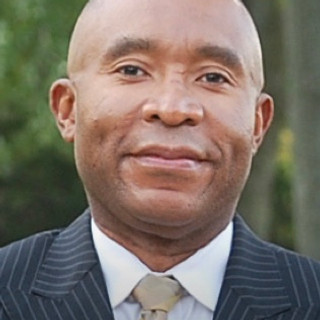
More Days Behind Me Than Ahead of Me

"So teach us to number our days, that we may gain a heart of wisdom." — Psalm 90:12
There are seasons in every believer's life when the Lord graciously forces him to stop long enough to evaluate not merely where he has been, but where he is going. For me, that season has arrived at sixty-two years of age. While none of us knows the number of days God has ordained for us, I have come to the sober realization that I almost certainly have more days behind me than I have ahead of me. That realization has not filled my heart with discouragement.
Rather, it has produced within me a renewed clarity regarding what truly matters. There was a time when I assumed there would always be another year to accomplish what God had placed upon my heart, another opportunity to strengthen His Church, another chance to proclaim His gospel, another occasion to confront error and defend the truth. Age has a way of exposing the arrogance of that assumption. Living in light of eternity has become more than a biblical concept to me; it is now the lens through which I evaluate every remaining day God, in His grace, chooses to give me. Time, once appearing almost limitless, now feels increasingly precious because I recognize that every sunrise represents one fewer opportunity to labor for the Kingdom of God.
One of the unintended consequences of growing older is that death ceases to be an abstract theological doctrine and becomes an ever-present reminder of our own mortality. The funerals become more frequent. The names appearing in the obituary section are no longer those of strangers but classmates, ministry colleagues, neighbors, and friends. The recent passing of Senator Lindsey Graham serves as yet another reminder that no amount of influence, accomplishment, or public recognition exempts anyone from the appointment that God has established for every human being. Hebrews 9:27 reminds us with unmistakable clarity, "It is appointed unto men once to die, but after this the judgment."
We spend enormous amounts of time preparing for retirement, planning vacations, building careers, and securing financial stability, yet comparatively little time preparing ourselves—and helping others prepare—for the inevitable day when we shall stand before the Lord Jesus Christ. Death is the great equalizer. It humbles presidents and paupers, pastors and politicians, billionaires and beggars alike. Every obituary silently preaches the same sermon: your appointment is coming as surely as mine has come.
As I have reflected upon these realities, I have found myself asking a question that every Christian should ask with increasing frequency as the years advance: What do I intend to do with whatever time God has left for me? I cannot determine the length of my life, but by God's grace I can determine how I will spend it. The Lord may grant me another twenty years, another decade, another twelve months, or He may call me home before this article is ever read. Those details belong exclusively to His sovereign providence. What belongs to me is the stewardship of today. Scripture consistently reminds us that the Christian life is measured not merely by longevity but by faithfulness. Moses lived one hundred and twenty years; Stephen served only a brief season before giving his life for Christ. Both fulfilled the purpose for which God had ordained them because both were faithful.
For that reason, I have reached a more settled and determined conviction. Whatever years remain to me, however many or however few they may be, I intend to devote them to sounding the alarm. I have no desire to drift quietly into retirement while watching the Church lose her theological conviction and the culture descend further into moral confusion. I do not wish to spend the closing chapter of my life pursuing greater comfort, greater leisure, or greater personal fulfillment.
By the grace of God, I want the final chapter of my life (what I frequently refer to as my fourth quarter) to be the most spiritually fruitful. I want every article I write, every Bible study I teach, every video I produce, every sermon I preach, and every divine conversation God sovereignly provides to point men and women toward Jesus Christ and remind them that eternity is infinitely more real than the fleeting pleasures of this present world. If I possess any remaining strength, wisdom, or influence, I desire to expend it in service to the One who purchased me with His own blood.
That commitment does not arise from the belief that I can preserve America through political activism or rescue Western civilization through persuasive writing. History reminds us that nations rise and nations fall according to the sovereign purposes of God. Kingdoms that once appeared invincible now exist only in museums and history books. My confidence has never rested in the permanence of the American Republic. My confidence rests in the unchanging reign of King Jesus, whose Kingdom cannot be shaken and whose promises cannot fail. Yet because I love my Savior, I also love His Church, and because I love His Church, I cannot remain indifferent while she drifts toward complacency at precisely the moment when she ought to display her greatest courage.
More than anything else, I find my thoughts returning repeatedly to the closing moments of my own earthly pilgrimage. I often imagine the day when I shall stand before the Lord whom I have sought, however imperfectly, to serve. In that moment every earthly achievement will lose its significance. No one will care how many articles I published, how many subscribers followed my ministry, how many books I owned, or how many opinions I successfully defended. The applause of this world will have faded into silence. Only one voice will matter. Only one evaluation will possess eternal significance. My greatest longing is that, by His grace alone, I might hear my Savior say, "Well done, good and faithful servant." If those words await me at the conclusion of my race, every sacrifice will have been worthwhile, every criticism insignificant, and every hardship momentary. It is for that commendation—not the approval of this world—that I now desire to spend every remaining day the Lord entrusts to me. In a word, I only seek to serve for an Audience of One.
Death Is God's Reminder That Time Is Short

The longer I live, the more convinced I become that one of the greatest deceptions Satan has ever perpetrated upon humanity is persuading us that we have plenty of time. It is a deception because it is believable. Most people awaken each morning assuming they will awaken the next. We plan next year's vacation before giving serious thought to our own funeral. We carefully prepare our financial portfolios while neglecting to prepare our souls. We imagine that opportunities for obedience, repentance, reconciliation, and faithful service will somehow present themselves tomorrow, next week, or next year. Yet nowhere does God promise us tomorrow. He gives us today. Every tomorrow belongs exclusively to His sovereign will.
The recent passing of Senator Lindsey Graham once again reminded our nation that death does not consult our calendars before it arrives. It interrupts careers, ministries, families, ambitions, and carefully constructed plans without asking whether the timing is convenient.
One day a man is engaged in the ordinary responsibilities of life; the next he has stepped into eternity. Whether one admired Senator Graham's politics or disagreed with many of his positions is ultimately beside the point. His passing serves as a powerful reminder that every life, regardless of its prominence, eventually reaches its appointed conclusion. Scripture declares this reality with striking simplicity: "It is appointed unto men once to die, but after this the judgment" (Hebrews 9:27). That appointment cannot be postponed through influence, wealth, education, political office, or medical advancement. The moment God has ordained will arrive with absolute certainty.
Modern Western culture has labored diligently to remove death from everyday consciousness. Previous generations lived much closer to mortality. Families often cared for dying relatives in their own homes. Children attended funerals and observed firsthand the brevity of life. Cemeteries occupied central places within communities and churchyards served as continual reminders that every generation eventually yields its place to another. Today, however, death is largely hidden behind hospital walls, funeral homes, and carefully managed ceremonies that seek to minimize its sobering reality. We speak endlessly about extending life expectancy, improving quality of life, and postponing the effects of aging, while giving comparatively little attention to the certainty that every heartbeat carries us one step closer to eternity.
The Scriptures refuse to allow God's people to ignore this reality. Moses prayed, "Teach us to number our days, that we may gain a heart of wisdom." Notice that Moses did not ask the Lord to increase the number of his days. He asked for the wisdom to number them. There is profound theological significance in that distinction. Wisdom is not found merely in living a long life; wisdom is found in understanding that life, regardless of its length, is astonishingly brief when viewed against the backdrop of eternity. James reinforces the same truth when he asks, "What is your life?" before answering his own question: "For you are a mist that appears for a little time and then vanishes." Nothing could stand in sharper contrast to the spirit of our age. We spend our lives attempting to convince ourselves that we are permanent, while God continually reminds us that we are pilgrims.
This biblical perspective profoundly reshapes the way Christians ought to evaluate success. Our culture teaches us to measure life by accumulation—more possessions, greater influence, larger retirement accounts, increasing recognition, and expanding opportunities. Scripture measures life differently. The Lord does not ask whether His servants accumulated the greatest wealth or attained the highest office. He asks whether they proved faithful with what had been entrusted to them. The parable of the talents makes this abundantly clear. The Master's commendation was not reserved for the servant who produced the largest visible accomplishments but for the servant who faithfully discharged his stewardship. The words every believer longs to hear are not, "Well known," "Well respected," or "Well accomplished." They are, "Well done, good and faithful servant."
That truth has become increasingly precious to me as I reflect upon my own remaining years. I find that many of the ambitions which once occupied my attention have gradually lost their appeal. The desire to impress others fades when one realizes that earthly applause disappears the moment eternity begins. Recognition that seemed important in one's forties often appears remarkably insignificant in one's sixties. Titles, accomplishments, and accolades tend to shrink when viewed from the perspective of standing before Jesus Christ. What grows larger instead are the eternal questions.
Have I faithfully proclaimed His Word?
Have I loved His Church?
Have I pointed sinners to the cross?
Have I equipped believers to think and live biblically, and to think critically and soberly, as we observe the world crumbling right before our very eyes?
Have I invested my life in those things that moth and rust cannot destroy?
The Apostle Paul provides a compelling example of such eternal perspective. Writing to the Philippians from a Roman prison, uncertain whether he would soon be executed, Paul did not devote his attention to preserving his own life. Instead, he confessed that his earnest expectation was that "Christ will be honored in my body, whether by life or by death." Those words reveal a man whose greatest concern was not survival but faithfulness. Paul understood that death could not rob him of anything truly valuable because everything that ultimately mattered had already been secured in Jesus Christ. Consequently, he could declare with remarkable confidence, "For to me to live is Christ, and to die is gain."
I cannot help but wonder how differently many of us would live if we embraced that same perspective. Would we spend so much energy pursuing temporary pleasures if we genuinely believed that eternity stood just beyond the horizon? Would we postpone obedience so casually? Would we become consumed with controversies that possess little eternal significance? Or would we devote ourselves with renewed intensity to those things that Scripture repeatedly declares will endure forever—the Word of God, the souls of men and women, and the Kingdom of our Lord Jesus Christ? Every funeral silently asks those questions. Every obituary reminds us that one day others will ask them concerning us.
For that reason, death should never merely sadden the Christian; it should also instruct him. God intends mortality to teach us wisdom. Every passing year should loosen our grip upon this world while strengthening our affection for the world to come. Every gray hair should remind us that our redemption draws nearer. Every funeral should intensify our commitment to proclaim the Gospel while opportunity remains. Every reminder of death should produce within us a greater appreciation for the life that is found only in Jesus Christ. When viewed through the eyes of faith, even death becomes a gracious teacher because it continually points believers away from the temporary and toward the eternal.
The Devil's Greatest Victory Is Not Persecution but Spiritual Apathy

If death reminds us that our time is short, then spiritual apathy ensures that we squander whatever time remains. It is for this reason that I have become increasingly convinced that one of Satan's greatest triumphs in our generation is not the persecution of the Church but the gradual cultivation of indifference within it. Throughout the history of Christianity, seasons of persecution have often produced remarkable spiritual vitality. The early Church flourished under Roman oppression. The Reformers boldly proclaimed biblical truth under the threat of imprisonment and execution. Missionaries willingly crossed oceans knowing they might never return home. The blood of the martyrs truly became the seed of the Church because suffering often purified God's people, clarified their priorities, and deepened their dependence upon Christ. Prosperity, however, has frequently produced the opposite effect. Comfort has a subtle way of dulling spiritual vigilance, replacing earnest dependence upon God with quiet self-sufficiency and convincing believers that the urgency which characterized previous generations is no longer necessary.
The genius of Satan's strategy lies in its subtlety. He rarely succeeds by persuading faithful Christians to abandon the faith overnight. More commonly, he accomplishes his objective by encouraging gradual compromise. He replaces prayer with busyness, conviction with convenience, holiness with happiness, discipleship with entertainment, and Gospel proclamation with endless distraction. The believer who would never consciously deny Christ may nevertheless find himself living as though Christ's Kingdom occupies only a small portion of his daily concerns. Without ever rejecting biblical truth intellectually, he slowly ceases to allow that truth to shape his priorities, direct his affections, and govern his decisions. Such a person often continues attending church, continues affirming orthodox doctrine, and continues identifying as an Evangelical, all while his spiritual passion quietly diminishes beneath the surface.
Our Lord repeatedly warned against precisely this danger. The church in Sardis had a reputation for being spiritually alive, yet Christ declared it dead. The church in Laodicea imagined itself rich and in need of nothing, while the Lord exposed its true condition as wretched, pitiable, poor, blind, and naked. What is striking about both congregations is that neither appears to have recognized its own spiritual decline. Their greatest problem was not merely theological error but spiritual self-deception. They evaluated themselves by outward appearances, while Christ evaluated them by the condition of their hearts. That should cause every believer to pause. It is entirely possible to enjoy an excellent reputation among men while standing in desperate need of repentance before God.
J. C. Ryle, whose writings continue to challenge Christians more than a century after his death, frequently warned that spiritual decline seldom announces itself dramatically. He observed that believers do not ordinarily fall into serious error all at once but rather drift gradually through a series of seemingly insignificant compromises. That insight remains profoundly relevant today. Churches rarely abandon biblical authority in a single congregational meeting. Families seldom cease discipling their children with a single deliberate decision. Individual Christians do not ordinarily awaken one morning having lost their first love for Christ. Instead, small compromises accumulate over months and years until what once would have troubled the conscience becomes accepted as normal. The danger lies precisely in the gradual nature of the process. Because the decline is slow, it often goes unnoticed until its consequences become unmistakable.
A. W. Tozer expressed the same concern when he wrote, "Complacency is a deadly foe of all spiritual growth." Tozer understood that the Christian life cannot remain spiritually stationary. Scripture consistently portrays believers as either pressing forward in holiness or drifting backward toward worldliness. There is no biblical category for contented stagnation. The Apostle Paul described the Christian life as a race requiring discipline, endurance, and perseverance. The writer of Hebrews urged believers to lay aside every weight and the sin which clings so closely, recognizing that spiritual progress demands continual vigilance. John Owen summarized the matter with characteristic precision when he warned, "Be killing sin, or sin will be killing you." Owen understood that spiritual warfare never pauses. If believers cease resisting the corrupting influence of sin, sin does not politely wait until they resume the battle; it continues its destructive work without interruption.
When I observe much of contemporary Evangelicalism, I cannot help but conclude that many of our greatest struggles are not primarily intellectual but spiritual. We possess unprecedented access to biblical resources. Entire libraries fit upon a smartphone. Faithful sermons from gifted pastors around the world may be heard at the touch of a screen. Countless books, commentaries, theological journals, and Bible study tools are available to ordinary believers in ways previous generations could scarcely have imagined. Yet despite this abundance of resources, biblical literacy often appears surprisingly shallow. Many Christians know far more about political commentators, professional athletes, entertainers, or social media personalities than they know about the Scriptures. We have accumulated information without necessarily cultivating transformation. Knowledge, valuable though it is, becomes spiritually dangerous when it produces confidence without obedience.
Perhaps nowhere is this danger more evident than in the way many believers consume Christian content. We live in an era in which sermons, podcasts, conferences, books, and online discussions are available almost without limit. Such resources are genuine blessings when they lead believers toward greater holiness and deeper obedience. They become liabilities, however, when consuming Christian material begins to substitute for practicing the Christian life. Listening to a sermon is not the same as obeying it. Reading a book on prayer is not the same as praying. Watching videos defending the Christian faith cannot replace personally sharing the gospel with one's neighbors. Spiritual maturity is never measured merely by what we know; it is measured by how faithfully we obey what God has revealed.
Leonard Ravenhill once lamented that the modern Church had become "long on talk but short on prayer." His observation remains painfully relevant. We discuss revival more often than we seek it. We analyze cultural decline more frequently than we weep over it. We debate theology while neglecting personal holiness. We express concern about the next generation while investing comparatively little time in discipling our own children and grandchildren. None of these activities are inherently wrong. Thoughtful theological discussion has its proper place. Cultural analysis is often necessary. Yet when these pursuits begin replacing prayer, evangelism, discipleship, and faithful obedience, they become subtle instruments through which Satan lulls God's people into spiritual complacency.
This is why I believe spiritual apathy represents one of the greatest dangers confronting the Evangelical Church today. A sleeping Church cannot awaken a dying culture. A complacent Church cannot effectively call a nation to repentance. A distracted Church cannot faithfully fulfill the Great Commission entrusted to her by the risen Christ. Before we lament the moral confusion surrounding us, we would do well to examine the spiritual condition within us. Revival has never begun in the halls of government, the universities, or the entertainment industry. Throughout history it has always begun when God's people humbled themselves, repented of their own sins, returned to His Word, and sought His face with renewed earnestness. Perhaps the greatest need of this generation is not another political movement or cultural strategy but a Church that once again trembles before the Word of God and lives every day with eternity fixed firmly before her eyes.
When the Church Sleeps, the Culture Never Does

One of the great tragedies of our time is that many Christians have become genuinely surprised by the moral and spiritual direction of our nation. Every election cycle, every controversial court decision, every new assault upon biblical morality, and every attempt to redefine what God has clearly established is met with renewed expressions of disbelief, as though these developments have emerged suddenly and without warning. Yet they have not appeared overnight. They are the predictable consequence of a cultural revolution that has been unfolding for decades. What we are witnessing today is not the beginning of America's moral transformation but the harvest of seeds that were planted generations ago.
Ideas possess consequences because ideas shape worldviews, and worldviews ultimately shape civilizations.
A society does not suddenly abandon biblical truth. It first begins to question the authority of Scripture. Once Scripture no longer occupies the position of ultimate authority, the culture gradually enthrones autonomous human reason as the final arbiter of truth. Morality then becomes negotiable because it is no longer anchored in the unchanging character of God. What one generation recognizes as self-evidently evil, the next generation merely debates, and the generation that follows often celebrates. History demonstrates this pattern with remarkable consistency. The collapse of civilizations rarely begins upon the battlefield. More often it begins in the classroom, the home, the church, and the public square, where foundational convictions are quietly exchanged for more culturally acceptable alternatives.
The Apostle Paul described this progression with remarkable precision in the opening chapter of Romans. He does not begin by discussing political institutions, economic theories, or governmental structures. He begins with humanity's rejection of God. Although men knew God through the testimony of creation, they refused to honor Him as God or give thanks to Him. Their thinking became futile, their hearts were darkened, and they exchanged the truth of God for a lie. Only after that fundamental act of rebellion does Paul describe the moral consequences that inevitably followed. Three separate times he declares that "God gave them over" to the desires they had chosen. The moral collapse of a civilization is therefore never the primary disease. It is the symptom of a much deeper spiritual condition.
This biblical principle is indispensable if Christians are to understand the present cultural moment. We are witnessing far more than disagreements over public policy. We are observing the inevitable consequences of competing worldviews. When truth becomes subjective, every moral boundary eventually becomes negotiable. If human beings are merely the products of evolutionary processes rather than the image bearers of God, why should objective morality exist at all? If personal autonomy becomes the highest good, then every institution designed by God—including marriage, the family, and even biological reality itself—will eventually be challenged whenever it appears to restrict individual desire. The debates dominating our culture today are therefore not fundamentally political. They are profoundly theological, even when those participating in them refuse to acknowledge it.
For that reason, I view the recent electoral successes of openly democratic Socialist candidates with deep and alarming concern, not because I believe every individual who supports those candidates fully understands the philosophical assumptions underlying Socialism, but because those victories reveal something far more significant than electoral preferences. Elections function as cultural barometers. They reveal the direction in which a people are already moving. They expose prevailing assumptions regarding human nature, justice, authority, responsibility, and the proper role of government. Long before a political movement gains sufficient votes to win office, it has already gained influence in classrooms, universities, media organizations, entertainment, and countless everyday conversations. Ballots do not create worldviews; they simply reveal them.
My concern with Socialism, therefore, extends beyond economics. At its heart, Socialism rests upon a fundamentally deficient understanding of humanity. It assumes that society's principal problem lies in the unequal distribution of wealth, opportunity, or power. Scripture presents a radically different diagnosis. According to the Word of God, the central problem confronting every civilization is the sinful condition of the human heart. Jeremiah declared that "the heart is deceitful above all things, and desperately sick." Jesus Himself taught that evil actions proceed from within the human heart rather than from external economic arrangements. Until that problem is addressed through repentance and faith in Jesus Christ, no political system—whether Socialist, Capitalist, Democratic, or otherwise—can ultimately produce the righteousness that God requires. Fallen people inevitably produce fallen institutions because institutions merely reflect the character of those who govern them.
This distinction explains why Christians must resist the temptation to place their ultimate hope in politics while simultaneously refusing the equally dangerous temptation to withdraw from public life altogether. Scripture commands believers to pray for those in authority, to pursue justice, to love their neighbors, and to function as salt and light within the societies where God has providentially placed them. Yet Scripture never suggests that legislation can regenerate the human heart. The Church possesses a mission that no government can accomplish because only the gospel addresses humanity's deepest need. Political engagement therefore has its proper place, but it must always remain subordinate to the proclamation of Christ crucified and risen. Whenever the Church forgets this priority, she inevitably exchanges her prophetic voice for partisan rhetoric.
Sadly, I fear that many Evangelicals have drifted toward one of two opposite errors. Some have become so consumed with politics that nearly every conversation, every sermon, and every public statement is filtered through a political lens. Others have retreated so completely from cultural engagement that they speak as though biblical faithfulness requires silence on the nation's moral direction. Both approaches fail to reflect the balance of Scripture. The prophets addressed kings. John the Baptist confronted Herod. Paul reasoned before governors and rulers. Yet none of these men confused political reform with spiritual regeneration. Their primary concern was always the proclamation of God's truth, regardless of the audience before whom they stood.
History repeatedly confirms that genuine societal transformation has almost always followed periods of profound spiritual awakening rather than political revolution. The First Great Awakening reshaped the moral landscape of the American colonies because thousands of men and women experienced genuine conversion through the preaching of the gospel. The Evangelical revivals that influenced William Wilberforce's campaign against the British slave trade arose not from legislative strategy but from renewed devotion to biblical truth. Wherever the Church has faithfully proclaimed Christ, societies have often experienced remarkable moral benefits. Whenever the Church has neglected her primary mission, cultural decline has accelerated regardless of which political party held power.
This is why I remain convinced that the greatest crisis confronting America is not fundamentally political but spiritual. Political controversies dominate headlines because they are immediately visible, but beneath them lies a far more significant conflict over ultimate authority. Will God determine what is true, good, and just, or will fallen humanity assume that role for itself? Every election, every legislative debate, every cultural controversy, and every moral revolution ultimately reflects how that question is answered. If the Church truly understands this reality, then our greatest responsibility is neither despair nor triumphalism. It is faithful proclamation. We must call our nation to repentance, proclaim the sufficiency of Jesus Christ, disciple the next generation with intentionality, and refuse to surrender biblical truth regardless of the prevailing winds of public opinion. Cultures may drift, governments may change, and civilizations may rise and fall, but the Word of our God stands forever. It is upon that unchanging foundation—and that foundation alone—that lasting hope may be found.
The Watchman's Calling Has Never Been More Urgent

As I have reflected upon these matters over the past several years, I have found my thoughts returning repeatedly to one of the most sobering images found anywhere in the Scriptures—that of the watchman standing upon the wall. In the ancient world, the watchman occupied a position of enormous responsibility. While others slept peacefully within the safety of the city, he remained awake, scanning the horizon for approaching danger. His assignment was neither glamorous nor particularly appreciated when no immediate threat appeared. Yet the security of the entire city often depended upon the vigilance of a single individual who understood that complacency could prove catastrophic. If he observed an advancing enemy and faithfully sounded the trumpet, he had discharged his responsibility regardless of how the people responded. If, however, he saw danger approaching and remained silent, the consequences of that silence would rest squarely upon his shoulders.
While the imagery of the watchman originates in the Old Testament, the principle of spiritual vigilance and responsibility is clearly affirmed in the New Testament. The Apostle Paul exhorts believers in Ephesians 5:11, “Take no part in the unfruitful works of darkness, but instead expose them.” This command underscores the responsibility of every follower of Christ not only to avoid sin but to actively confront and reveal it. The Christian life is not passive. It requires discernment, courage, and a willingness to stand for truth even when doing so is uncomfortable or unpopular.
Those to whom God has entrusted His truth bear a corresponding responsibility to proclaim that truth faithfully. The Great Commission is, in many respects, the New Testament expression of this calling. Christ did not command His disciples merely to preserve the Gospel for their own encouragement. He commanded them to make disciples of all nations, teaching them to observe everything He had commanded. The Church therefore exists not simply to gather believers for worship but to equip them for faithful witness in a world that desperately needs the saving message of Jesus Christ.
This conviction becomes even more compelling when we consider the testimony of the Apostle Paul. As he prepared to depart from the Ephesian elders, fully aware that imprisonment and suffering awaited him, he made a remarkable declaration: “Therefore I testify to you this day that I am innocent of the blood of all, for I did not shrink from declaring to you the whole counsel of God” (Acts 20:26–27). Those words reveal a man who understood his stewardship before God. Paul did not measure the success of his ministry by numerical growth, financial prosperity, or widespread public approval. He measured it by faithfulness. He had proclaimed the whole counsel of God. He had not selected only those doctrines likely to be warmly received. He had preached the comforting promises of the Gospel alongside its searching demands. He had proclaimed both the Love of God and the Holiness of God, both Grace and Repentance, both Mercy and Judgment. Consequently, he could face the end of his ministry with a clear conscience because he had withheld nothing that God had commanded him to declare.
That example stands in striking contrast to much of contemporary Christianity. We live in a time of tremendous pressure to edit the Christian message to make it more palatable to modern sensibilities. Difficult doctrines are quietly ignored. Sin is redefined in therapeutic rather than biblical categories. Repentance is frequently replaced by affirmation, and holiness is often treated as optional rather than essential to the Christian life. Churches understandably desire to reach unbelievers, but in some instances that worthy desire has gradually evolved into an unwillingness to proclaim anything that might produce discomfort or conviction. Yet the Gospel has always been both comforting and confronting. It comforts the brokenhearted by announcing forgiveness through Jesus Christ. It confronts the sinner because it declares that forgiveness is found only through repentance and faith.
Paul anticipated precisely this challenge when he wrote his final letter to Timothy. Knowing that his own execution was near, he urged his young protégé, “Preach the Word; be ready in season and out of season; reprove, rebuke, and exhort, with complete patience and teaching.” Those instructions remain as relevant today as when they were first penned. Timothy was not told to preach cultural trends, political movements, or personal opinions. He was commanded to preach the Word. Furthermore, Paul warned that a time would come when many would no longer endure sound doctrine but would gather teachers who would tell them what their itching ears desired to hear. That warning should not merely be applied to false teachers outside the visible Church. It should drive every faithful minister and every thoughtful Christian to continual self-examination. Are we seeking teachers who faithfully expound God's Word, or are we gravitating toward voices that consistently reinforce our existing preferences while seldom challenging our hearts?
The responsibility to function as watchmen extends beyond pastors and teachers. Fathers are watchmen within their homes. Mothers stand watch over the hearts of their children. Elders guard the flock entrusted to their care. Mature believers bear responsibility for encouraging younger Christians in the faith. Every member of the body of Christ possesses opportunities to influence others through faithful witness, compassionate correction, and consistent discipleship. The New Testament repeatedly emphasizes this mutual responsibility. We are commanded to encourage one another daily, to exhort one another, to bear one another's burdens, and to stir one another toward love and good works. Christianity has never been intended as a solitary pilgrimage. God has placed us within His Church so that we might strengthen one another as we await the return of our Lord.
For that reason, I believe one of the greatest needs of the contemporary Evangelical Church is the recovery of holy courage. Courage is not loudness. It is not arrogance, harshness, or a combative spirit. Biblical courage is the settled determination to obey God regardless of the consequences. Daniel displayed such courage by continuing to pray despite the king's decree. John the Baptist demonstrated it when he confronted Herod's immorality knowing full well the personal cost. The Apostles exhibited it when they declared, “We must obey God rather than men.” They did not speak with bitterness toward those who opposed them, nor did they seek conflict for its own sake. They simply refused to allow fear to silence the truth God had entrusted to them.
As I consider the remaining years the Lord may grant me, I find myself praying less for opportunities and more for faithfulness. Opportunities are ultimately in God's hands. Faithfulness, however, is the daily responsibility of every believer. I do not know how many more articles I will write, how many videos I will produce, how many more Bible studies I will teach, or how many more opportunities I will have to proclaim the gospel. What I do know is that every one of those opportunities is a sacred stewardship. I do not want to stand before Christ one day and realize that fear kept me silent when truth needed to be spoken, or that comfort persuaded me to remain seated when faithfulness required me to stand.
The Church has never needed celebrity as much as she has needed courage. She has never required greater sophistication than greater holiness. She has never advanced primarily because her people were culturally admired but because they were spiritually faithful. If the Lord should graciously awaken His Church in our generation, it will not be because Christians became more skillful at accommodating the spirit of the age. It will be because ordinary believers once again became convinced that eternity is real, that the Gospel is true, that Christ is worthy of complete obedience, and that there is no greater privilege than faithfully sounding the alarm until the Master Himself returns.
Living Every Day in Light of Eternity
The older I become, the more I am persuaded that one of the greatest deficiencies within contemporary Evangelicalism is not a lack of biblical knowledge but a diminished awareness of eternity. We affirm the doctrines of Heaven and Hell, the Return of Christ, the Resurrection of the Dead, and the Final Judgment, yet we often conduct our daily lives as though those realities belonged to some distant future rather than to one that stands just beyond the horizon. It is entirely possible to possess orthodox theology while living with remarkably little sense of eternal urgency. That disconnect should concern every thoughtful Christian because the New Testament consistently calls believers not merely to believe in eternity but to allow eternity to shape every aspect of their lives.
The Apostle Paul repeatedly directed believers' attention beyond the temporary concerns of this present age. Writing to the church at Colossae, he exhorted them, "Set your minds on things that are above, not on things that are on earth." Paul was not encouraging Christians to withdraw from earthly responsibilities or to neglect their obligations within the world. Rather, he was teaching them to interpret every earthly responsibility through an eternal perspective. The Christian employee performs his work faithfully because he ultimately serves Christ. The Christian husband loves his wife because his marriage reflects the relationship between Christ and His Church. Parents disciple their children because they recognize that young souls have been entrusted to them by God. Citizens engage responsibly in public life because they understand that righteousness exalts a nation. Everything assumes deeper significance when viewed through the lens of eternity.
Perhaps nowhere is this perspective more evident than in Paul's discussion of the judgment seat of Christ. In 2 Corinthians 5:10, he writes, "For we must all appear before the judgment seat of Christ, so that each one may receive what is due for what he has done in the body, whether good or evil." Sadly, this doctrine receives comparatively little attention in many churches today, yet it occupied an important place within apostolic preaching. Paul was not describing a judgment that determines whether believers enter heaven. That glorious certainty rests entirely upon the finished work of Jesus Christ. Our justification is secured through faith alone in Christ alone. The judgment seat of Christ concerns stewardship rather than salvation. It is there that the Lord will evaluate how faithfully His redeemed people used the time, opportunities, gifts, resources, and influence He graciously entrusted to them during their earthly pilgrimage.
That truth has become increasingly personal as I have reflected upon my own life. There was a time when I measured progress primarily by visible accomplishments. Like many younger men, I naturally thought in terms of goals to be achieved, ministries to be expanded, books to be read, places to visit, and responsibilities to fulfill. Those pursuits are not inherently wrong, and many are entirely appropriate. Yet as I have grown older, I find that my questions have changed. Increasingly I ask not, "How much can I accomplish?" but, "How faithfully am I stewarding what God has already entrusted to me?" That subtle shift has profoundly influenced the way I think about ministry, family, friendships, and even the ordinary routines of daily life. Faithfulness, not prominence, has become the measure by which I desire to evaluate my remaining years.
Jonathan Edwards understood this perspective perhaps better than any American theologian. As a young man, he composed a series of resolutions that would guide his life, among them the determination to live with all his might while he lived and to think often of his own dying. Such language may sound unusual to modern ears, but Edwards understood that frequent meditation upon death does not produce morbid Christians; it produces wise ones. A man who regularly remembers that he will soon stand before Christ begins to evaluate his priorities differently. Petty arguments lose much of their appeal. The pursuit of personal recognition becomes increasingly hollow. The temptation to compromise for temporary advantage weakens considerably when viewed against the certainty of eternal accountability.
This was equally true of the Apostle Peter. Near the end of his life, he wrote with remarkable transparency that he knew "the putting off of my body will be soon, as our Lord Jesus Christ made clear to me." Rather than slowing his ministry because death approached, Peter intensified it. He explained that he intended to continually remind believers of the truth so that, after his departure, they would be able to recall his teaching. Peter understood that his remaining days constituted a sacred stewardship. He desired to invest them in strengthening the Church rather than preserving his own comfort. His approaching death did not diminish his usefulness; it sharpened his focus.
I confess that Peter's example has deeply challenged me. At sixty-two years of age, I recognize that my earthly ministry has entered a different season. I no longer assume that decades remain before me. Whether the Lord grants me another twenty years or only a few, I understand that the time entrusted to me is finite. Far from discouraging me, that realization has infused my ministry with renewed purpose. It reminds me that every article represents an opportunity to strengthen believers. Every Bible lesson may help establish someone more firmly in the truth. Every conversation provides another occasion to point a soul toward Christ. Every day possesses eternal significance because it may be the final opportunity God grants me to accomplish a work He prepared beforehand for me.
This conviction has also reshaped my understanding of legacy. Our culture frequently speaks of legacy in terms of financial inheritance, professional accomplishments, or public recognition. Scripture presents a far richer understanding. A godly legacy consists of lives influenced for Christ, truth faithfully proclaimed, children and grandchildren discipled in the faith, churches strengthened through sound doctrine, and believers encouraged to persevere in holiness. Such a legacy rarely attracts the world's attention, yet it echoes throughout eternity. Long after earthly monuments have crumbled and human achievements have been forgotten, the fruit of faithful obedience continues because God is pleased to use ordinary acts of faithfulness to accomplish extraordinary eternal purposes.
When I imagine standing before my Savior, I do not believe He will ask whether I lived a comfortable life. I do not believe He will inquire whether I successfully avoided criticism or whether I accumulated the admiration of those around me. The questions that occupy my mind are very different.
Did I faithfully proclaim His Word?
Did I courageously defend His truth when it became costly to do so?
Did I shepherd those whom He entrusted to my influence?
Did I love His Church?
Did I devote my remaining years to those things that possessed eternal value rather than temporary significance?
Those are the questions that increasingly govern my prayers because they are the questions I believe Scripture teaches every believer to ask.
Consequently, I have reached a conviction that grows stronger with each passing year. I want to live every remaining day as though it may be my last opportunity to glorify Christ on this side of eternity—not with anxiety, but with joyful intentionality. I want to hold every possession loosely because none of it will accompany me into eternity. I want to love people deeply because every person I encounter bears the image of God and will exist forever either in His glorious presence or under His righteous judgment. I want to proclaim the Gospel with increasing boldness because no other message possesses the power to reconcile sinners to God. Above all, I want every remaining year of my life to testify that Jesus Christ is worthy not merely of a portion of my devotion but of my entire life. If the Lord should graciously permit me to finish my course with that testimony intact, then regardless of how many years remain, I shall consider them years well spent.
A Final Appeal to Evangelicals

Having reflected upon the brevity of life, the certainty of death, the subtle danger of spiritual apathy, the moral direction of our nation, and the biblical responsibility of God's people to function as faithful watchmen, I return to the question that has occupied my own heart throughout the writing of this article: How, then, should we live? That question is not merely philosophical. It is intensely practical because every sunrise presents us with another opportunity either to live intentionally for the glory of God or to drift one day farther from the purpose for which He redeemed us. Neutrality is an illusion. Every day either advances the Kingdom of Christ through our faithful obedience or is quietly surrendered to pursuits that will possess little value when measured against eternity.
I write these words, therefore, not as one who has mastered the Christian life, but as a fellow pilgrim who increasingly recognizes both the brevity of time and the greatness of the stewardship God has entrusted to each of us. The longer I walk with Christ, the more conscious I become of my own dependence upon His grace. If there is any faithfulness in my life, it is because He has sustained me. If there is any usefulness in my ministry, it is because He has chosen to employ an imperfect servant for His perfect purposes. That realization leaves little room for pride but ample room for gratitude. It also compels me to urge my fellow Evangelicals not to waste the years that God, in His mercy, still grants us.
We are living during one of the most significant periods in the history of the American Church. The moral assumptions that shaped previous generations are rapidly disappearing. Institutions once influenced by a broadly biblical worldview now openly reject the authority of Scripture. Many churches face increasing pressure to modify their doctrine in order to accommodate cultural expectations. Christian parents must disciple their children within an environment that often celebrates ideas directly opposed to the teaching of God's Word. Pastors are expected to avoid controversial subjects lest faithfulness be confused with intolerance. Believers employed within education, business, medicine, government, and countless other professions are discovering that obedience to Christ may require increasing personal sacrifice. None of these realities should surprise thoughtful students of Scripture. Jesus Himself warned that those who faithfully follow Him would encounter opposition because the servant is never greater than his Master.
At the same time, we must resist the temptation to interpret these developments with either fear or despair. Christians have faced difficult cultural moments throughout the history of the Church. Noah preached righteousness in a corrupt generation. Elijah believed he stood almost alone against Israel's idolatry. Daniel remained faithful while serving within pagan Babylon. The Apostles proclaimed Christ throughout an empire that frequently regarded Christianity as both foolish and dangerous. The Reformers confronted entrenched religious corruption. Missionaries carried the Gospel into lands where they were often met with hostility rather than welcome. Every generation has faced unique challenges, yet every generation has also discovered that the grace of God is entirely sufficient for the task He assigns. Our confidence therefore rests not in favorable cultural conditions but in the unchanging faithfulness of the God who has promised to build His Church.
For that reason, I believe this is not the hour for resignation but for renewed resolve. This is not the time for believers to retreat into comfortable isolation while hoping someone else will defend biblical truth. Neither is it the time to allow political engagement to eclipse our primary mission. The Church has been entrusted with something infinitely greater than a political platform. We have been entrusted with the Gospel of Jesus Christ—the only message capable of reconciling sinful men and women to a Thrice-Holy God. Every other responsibility we possess must remain subordinate to that glorious commission. We defend truth because the Gospel is true. We pursue justice because our God is just. We love our neighbors because Christ first loved us. We engage the culture because we desire to see men and women rescued from darkness and brought into the marvelous light of His Kingdom.
This conviction must also reshape the priorities of our churches and our homes. We cannot expect future generations to cherish biblical truth if we have failed to teach it faithfully. Parents cannot delegate the spiritual formation of their children exclusively to pastors, youth leaders, or Christian schools. The responsibility rests first within the home, where fathers and mothers are called to model lives of joyful obedience, daily repentance, faithful worship, and unwavering confidence in the authority of God's Word. Likewise, churches must once again recover the centrality of expository preaching, serious discipleship, fervent prayer, meaningful fellowship, and intentional evangelism. Programs, technology, and organizational efficiency possess their proper place, but none of them can substitute for the ordinary means through which God has always strengthened His people.
As I conclude these reflections, I find my thoughts returning to where this article began. At sixty-two years of age, I recognize, perhaps more clearly than ever before, that I almost certainly have more days behind me than ahead of me. Strangely, that realization has not diminished my hope. It has strengthened it. It has reminded me that every day still remaining is a gift of God's grace and an opportunity to glorify Him. It has freed me from the illusion that success must be measured by worldly standards. Increasingly, I desire only to be faithful. If the Lord should permit me to spend the remainder of my life encouraging believers to think biblically, proclaiming the Gospel without apology, strengthening Christ's Church, and warning my nation that genuine hope is found only in Jesus Christ, then I shall consider those remaining years abundantly well spent.
One day, sooner than any of us imagines, our opportunities for service will come to an end. The books will be closed. The sermons will have been preached. The articles will have been written. The conversations will have been completed. Faith will become sight, and every believer will stand before the Savior who loved us and gave Himself for us. On that day none of us will regret having prayed too much, loved too deeply, given too generously, proclaimed the Gospel too faithfully, or served Christ too sacrificially. Our only regrets will concern those opportunities we neglected because we imagined there would always be another tomorrow.
My prayer, therefore, is not that God would grant me many more years, although I would receive them gratefully if He should choose to do so. My prayer is that He would grant me faithfulness for every year He has already ordained. I desire to spend my remaining days sounding the alarm, strengthening His Church, proclaiming His Gospel, and reminding all who will listen that eternity is not merely a doctrine to be affirmed but a reality before which every one of us will soon stand. Should the Lord graciously permit me to finish my race in that manner, then I will ask for nothing more than to hear the words that have increasingly become the longing of my heart:
"Well done, good and faithful servant. Enter into the joy of your Master."
Until that day arrives, may we refuse the spiritual complacency that so easily entangles us. May we devote ourselves anew to the Word of God, to Prayer, to Holiness, to Faithful Discipleship, to Courageous Witness, and to the Proclamation of the Gospel. And may we so live that, whether Christ returns in our lifetime or calls us home through death, He will find us watching, working, and eagerly awaiting His glorious appearing.
Continue the Conversation
Thank you for taking the time to read this article. My prayer is that it has not only informed your mind but also stirred your heart to live more intentionally for Jesus Christ in light of eternity. If the Lord used these words to challenge, encourage, or strengthen your walk with Him, I would encourage you not to let the conversation end here.
I invite you to leave a comment below and share your thoughts. Whether you agree, have a question, or would simply like to continue the discussion, I welcome thoughtful, Christ-centered dialogue. One of the great blessings of Christian fellowship is sharpening one another as we seek to think and live biblically in an increasingly hostile culture.
If you found this article helpful, I would also ask you to share it with your family, friends, and church community. We live in a time when biblical truth is desperately needed, and every share helps extend this ministry's reach to those who might otherwise never encounter it.
I also invite you to stay connected through the other ministries the Lord has entrusted to me:
📖 Subscribe to my Blog
📘 Follow me on Facebook
▶️ Subscribe to my YouTube Channel
🎵 Follow me on TikTok
This ministry has never been about building a platform or gaining an audience. Its purpose has always been to exalt Jesus Christ, strengthen His Church, equip believers to think biblically, and proclaim the unchanging truth of God's Word in a rapidly changing world.
As always, keep your hands to the plow and seek to serve for an Audience of One.
With fear & trembling,
Ricky V. Kyles Sr., DEd.Min.


Comments